

Today, we are going to cover Why Rank Math Dominates SEO in 2026: Critical Features That Actually Influence Rankings!
I know I’m a Wealhy Affilliate and Rankmath is not in the defauilt pre-installed plugins in the pre-build websies.
However, Rankmath has been a must SEO plugin for all my websites and cliets websites.
Search rankings rarely change because you added one more plugin.
They change when you remove friction between three things:
-
What a page means
-
How Google discovers and processes it
-
What a searcher decides to click
Rank Math matters because it sits exactly on those pressure points inside WordPress.
It does not “rank you” by itself.
What it does is control the inputs that do affect rankings and ranking opportunities: indexability, crawl efficiency, canonical signals, structured data, internal linking signals, snippet eligibility, site architecture clarity, and error handling that preserves equity.
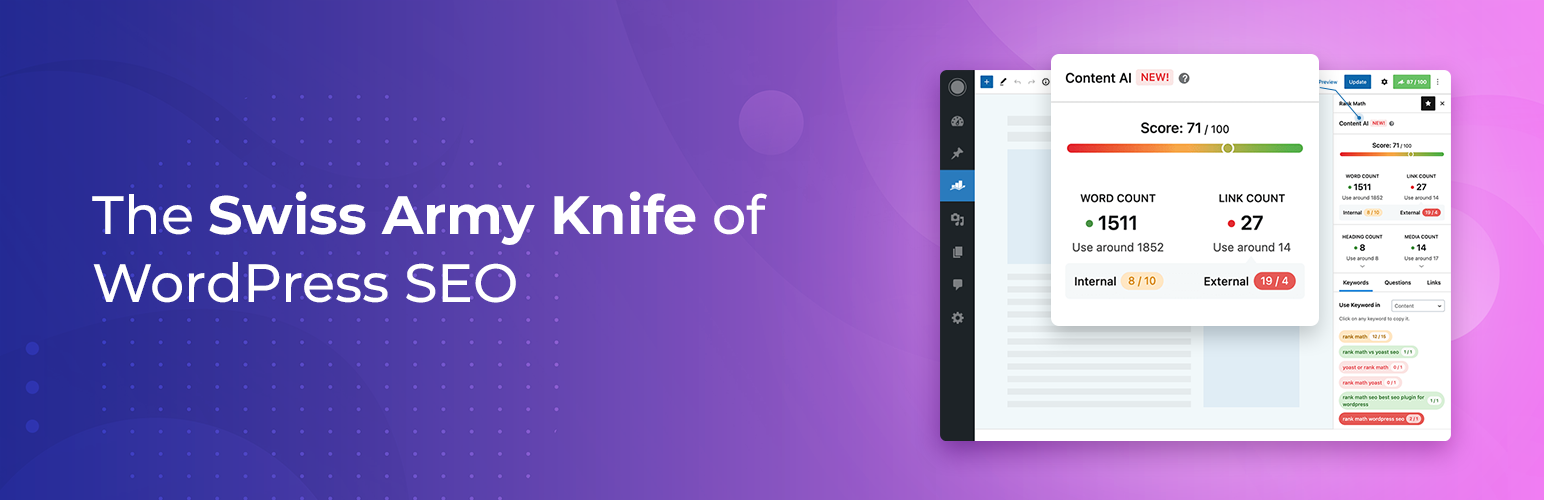 This article is a full, practical walk-through of Rank Math features that actually influence rankings, with examples and implementation details.
No filler.
No detours into other plugins.
You will also see places where Rank Math can quietly hurt you if you misconfigure it, because that is part of “what influences rankings” too.
What is Rankmath?
Rank Math SEO Plugin is a WordPress SEO plugin that helps site owners control how search engines discover, understand, and present their pages in search results.
 At its core, Rank Math acts as a technical and semantic bridge between your content and Google.
It does not create rankings by itself.
Instead, it manages the signals that search engines rely on when deciding what a page is about, whether it should be indexed, and how it should appear in search results.
What Rank Math actually does
Rank Math centralizes essential SEO controls inside WordPress, including:
-
Page titles and meta descriptions
-
Indexing and noindex rules
-
Canonical URL management
-
XML and News sitemaps
-
Structured data (schema)
-
Internal linking signals
-
Redirects and 404 error handling
-
Index status and performance tracking
These controls influence rankings indirectly by reducing ambiguity, preventing technical errors, and improving search result presentation.
Why Rank Math is different from basic SEO plugins
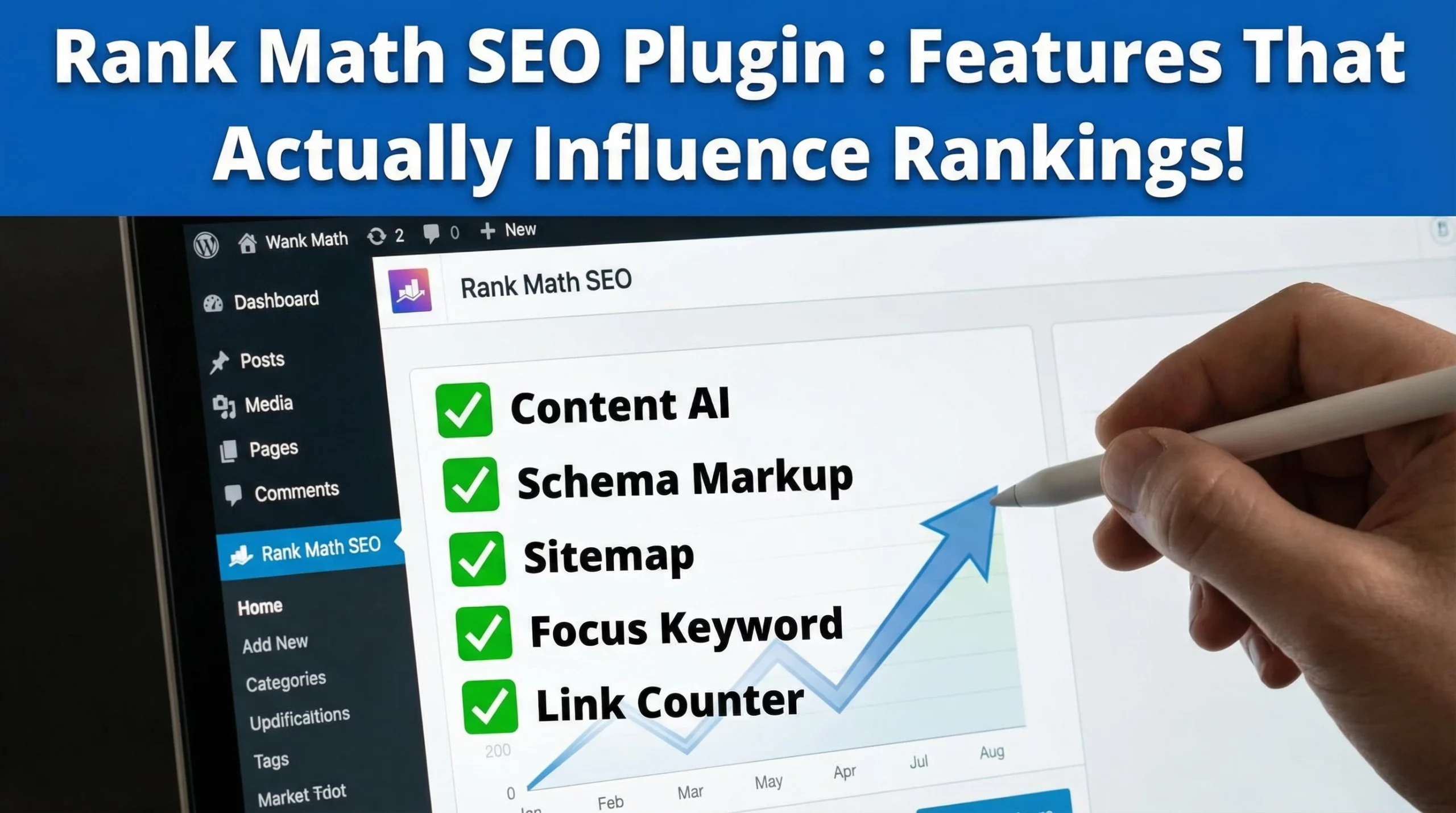 Most SEO plugins focus on surface-level checks such as keyword density or “green lights.” Rank Math goes deeper by emphasizing:
-
Index hygiene: deciding which pages should and should not exist in Google’s index
-
Search intent alignment: matching metadata and schema to what users are actually looking for
-
Crawl efficiency: helping search engines spend time on your best pages, not your weakest ones
-
Snippet optimization: improving how your pages look and compete in search results
Because of this, Rank Math is widely used on affiliate sites, content-heavy blogs, business websites, and WooCommerce stores where scale and consistency matter.
In simple terms
Rank Math is not an SEO shortcut.
It is an SEO control system.
If your content is strong, Rank Math helps search engines understand it faster and more accurately.
If your content is weak, Rank Math cannot save it, but it can prevent technical mistakes from making things worse.
Rank Math SEO Plugin 2026: Features That Actually Influence Rankings!
Rank Math is not an SEO checklist. It is a control system that manages how search engines crawl, interpret, and present your pages.
This article breaks down the Rank Math features that actually influence rankings in 2026, with a focus on indexing, structure, and search intent.
1) Setup Wizard that prevents indexing mistakes
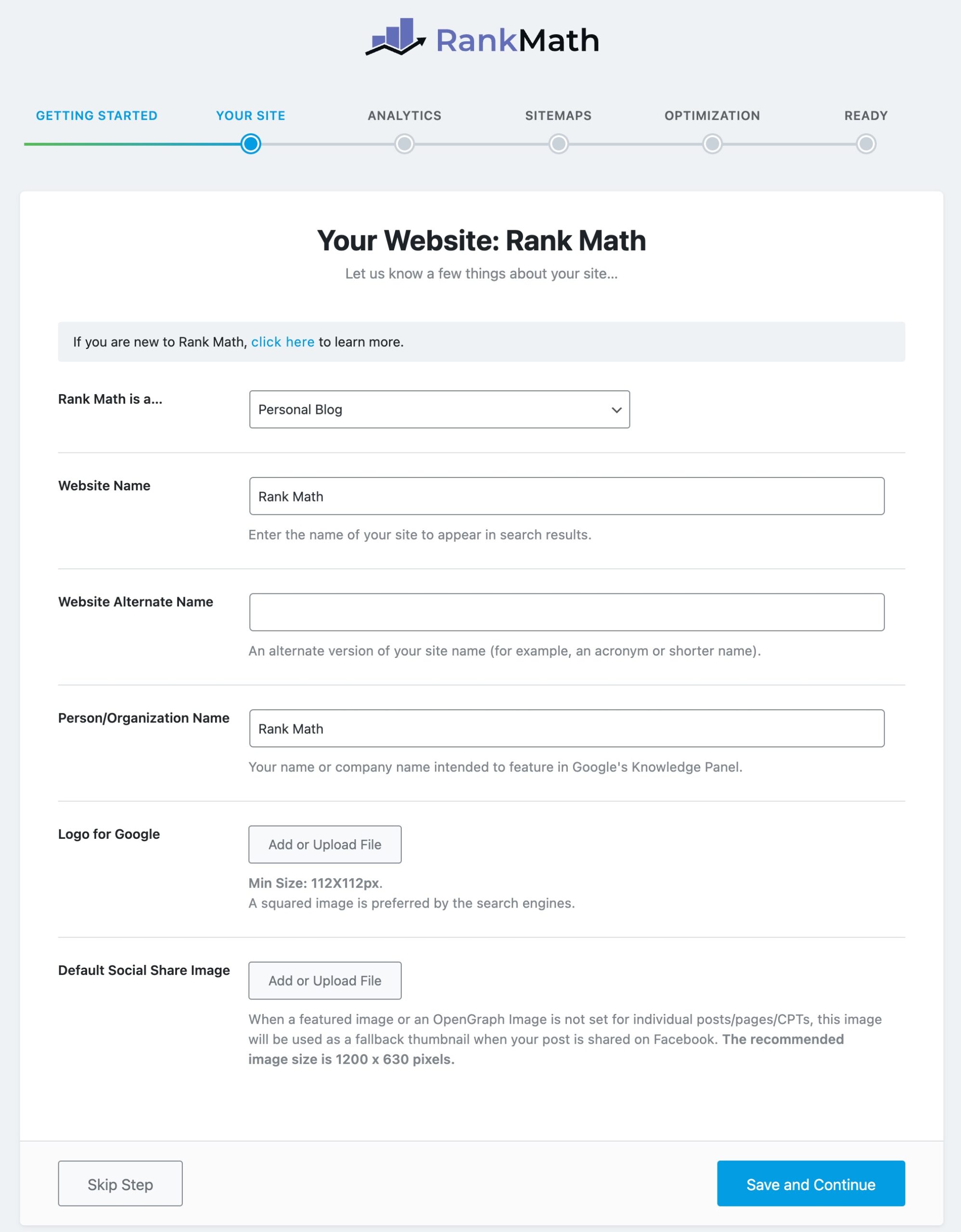
Rank Math’s Setup Wizard is not a “nice onboarding.” It is a ranking protection feature.
 Most ranking disasters on WordPress are self-inflicted:
-
Entire site accidentally set to noindex
-
Important post types excluded from sitemaps
-
Wrong default schema type applied across content
-
Missing brand signals in metadata
-
Canonicals misaligned after migrations
Rank Math’s wizard forces early decisions about site type, sitemap configuration, and basic indexing preferences.
That matters because search engines do not “forgive” mixed signals quickly.
If you publish 200 pages with the wrong index settings, you do not fix that with a quick toggle.
You fix it by waiting, recrawls, reprocessing, and sometimes re-ranking from scratch.
Example that influences rankings
Imagine a site with these post types:
-
Posts (blog)
-
Pages (core pages)
-
“Reviews” (custom post type)
-
“Deals” (custom post type)
If “Reviews” are your money pages but they are not included in sitemaps, Google can still find them eventually through internal links, but discovery slows down and crawl paths become longer.
That is not theory.
That is how crawl prioritization works in practice: clear lists of URLs reduce the cost of discovery and reduce the chance important pages remain undercrawled.
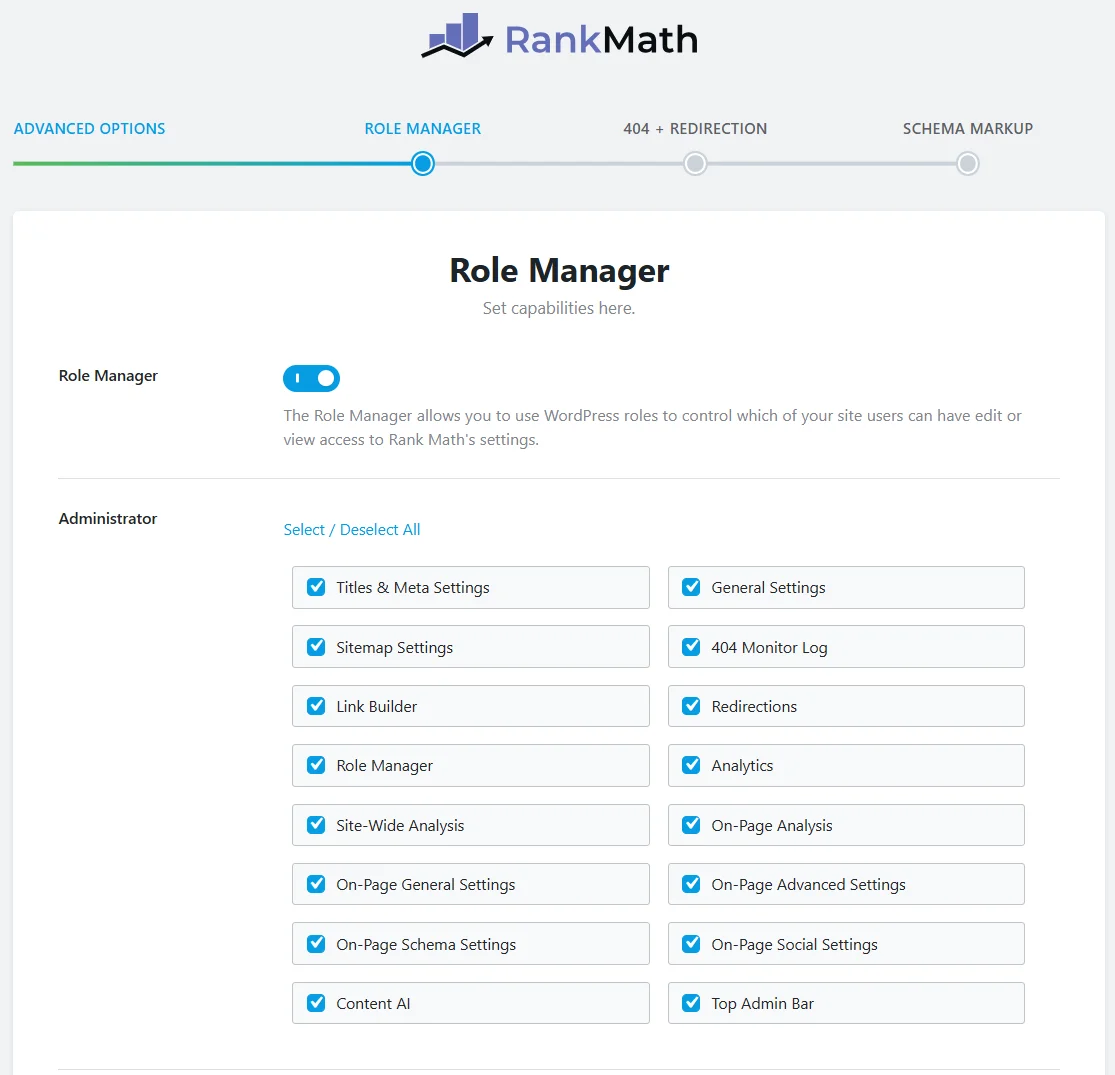
Rank Math emphasizes sitemap configuration as part of setup, then exposes it permanently under Sitemap Settings, which keeps this signal under control long-term.
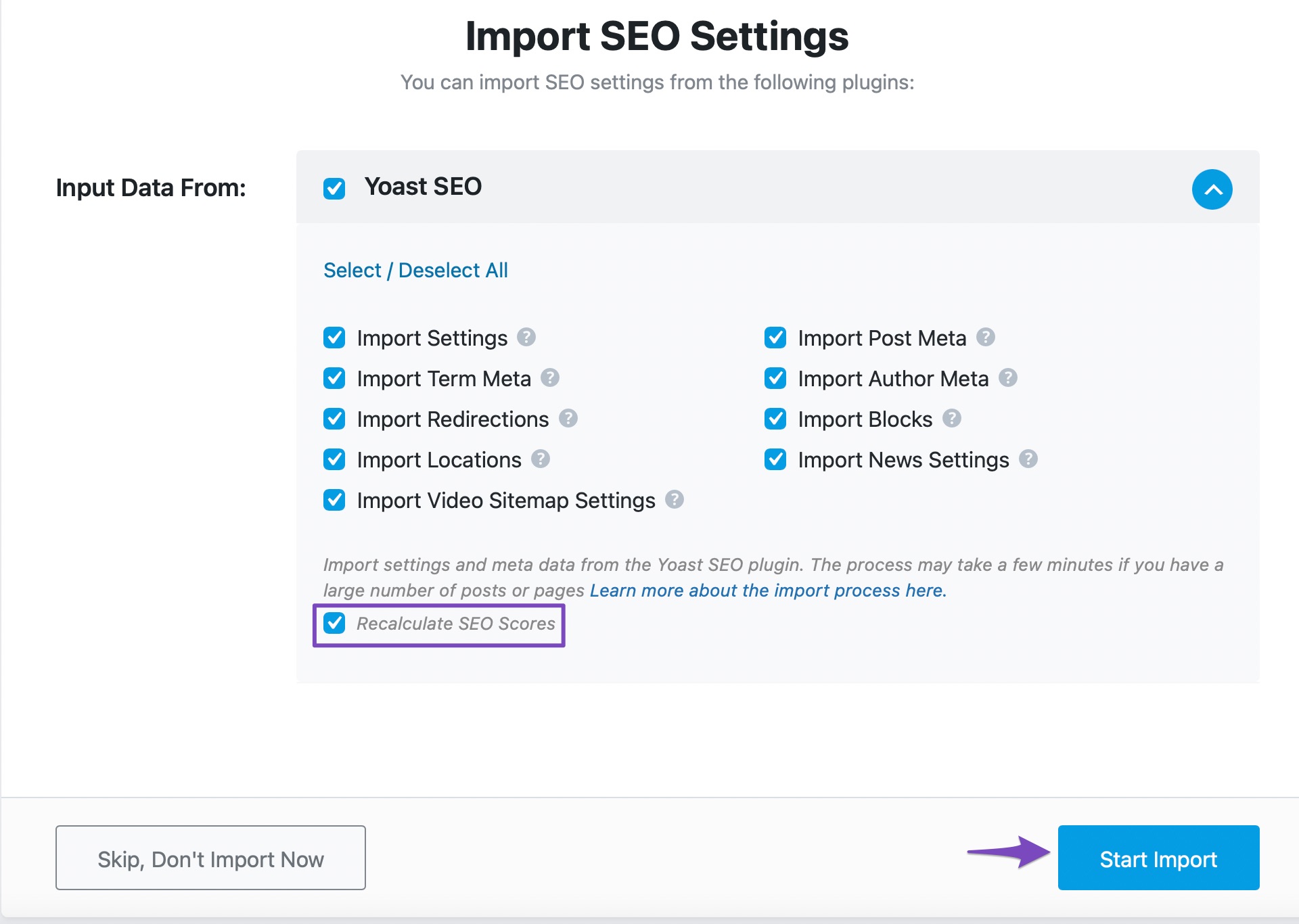 What to do in Rank Math
-
Run Setup Wizard
-
Confirm which post types are indexable
-
Confirm which post types go into sitemaps
-
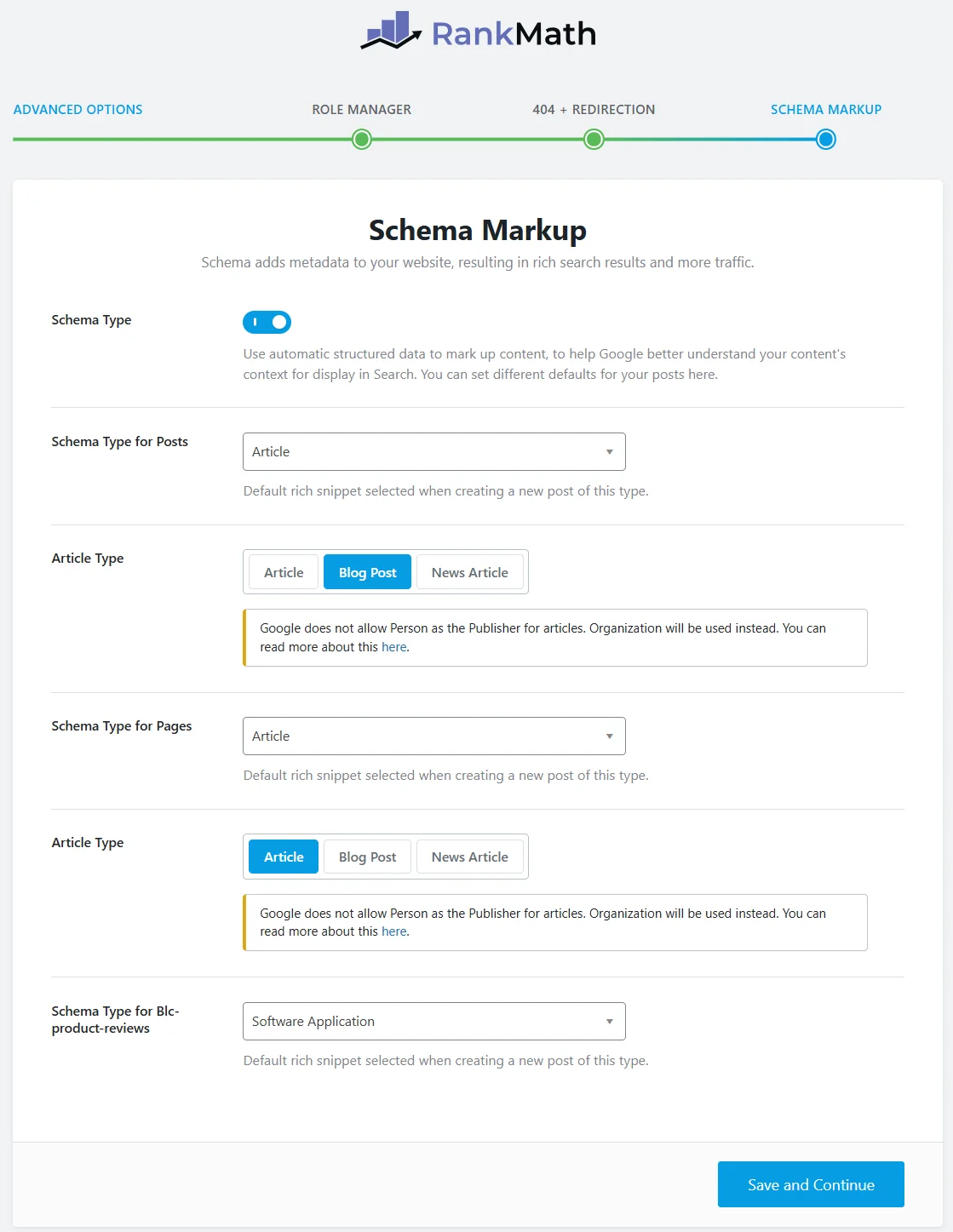
Confirm your preferred schema defaults for your main content type
-
Confirm Titles and Meta templates for each post type
This is not glamorous work. It is the kind of work that prevents invisible ranking ceilings.
2) Titles and meta templates that improve snippet wins
Rank Math lets you set title templates and meta description templates across your site under Titles & Meta.
It also lets you override titles per page in the editor.
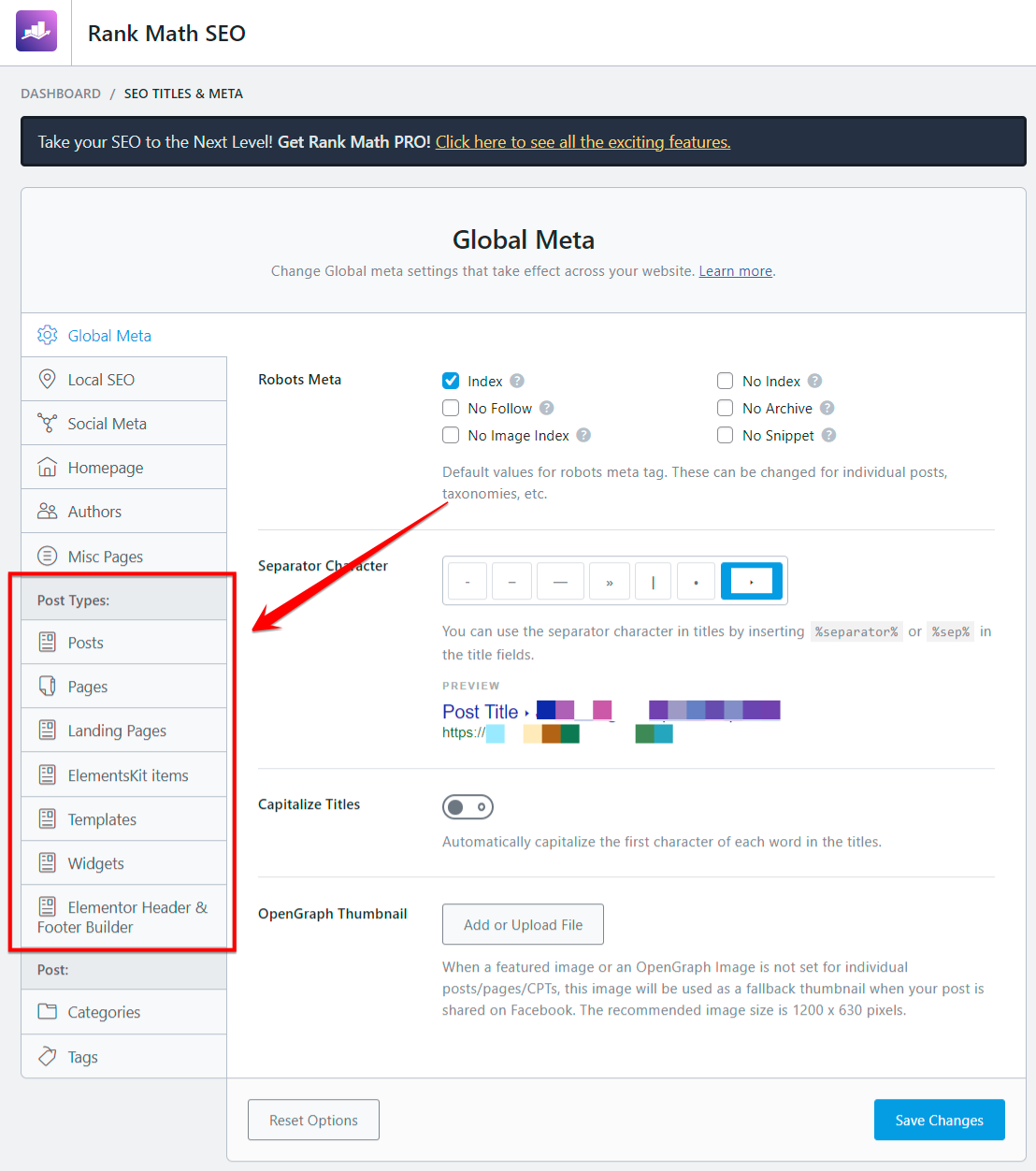 Why this influences rankings:
-
Google uses title tags heavily for SERP presentation and often for query relevance
-
CTR influences performance at scale, especially when your result is “close” to competitors
-
Templates reduce inconsistency across large sites, which is a real problem on affiliate and content-heavy sites
Rank Math’s edge here is workflow.
You can standardize how pages are presented in search while leaving room for per-page improvements.
How to build templates that win clicks
Here are template patterns that usually produce better SERP behavior without turning into clickbait.
For reviews
Title template idea
-
%title% Review: Pros, Cons, Pricing (%currentyear%)
Meta description template idea
-
“%title% breakdown: who it fits, who should skip it, key features, pricing, and the fastest way to decide.”
Then, on your money pages, you rewrite manually so it matches the actual angle of the page.
For “best” lists
Title template idea
-
“Best %title% (%currentyear%): Picks for %category% Buyers”
Then rewrite the top 20 pages by hand. Templates keep the rest tidy.
What not to do
-
Do not reuse identical titles across posts
-
Do not stuff brand names that are not on the page
-
Do not force the same structure onto pages with different intent
Templates are a baseline.
Rankings usually improve from the combination of intent match, snippet clarity, and strong internal linking.
Rank Math’s Titles & Meta system is the control panel for the snippet part of that equation.
3) Canonical URL control that prevents duplication
Canonical signals are a ranking gatekeeper.
If Google sees duplicates and you do not clearly declare the canonical version, you get any combination of:
-
Wrong URL ranking
-
Split link equity
-
Index bloat
-
Crawl budget waste
-
Soft cannibalization where neither page performs as well as it should
 Rank Math helps you manage canonicals at the page level and at scale through metadata settings.
Common duplication patterns in WordPress
-
Tag archives indexing and competing with posts
-
Category archives indexing and outranking posts for thin queries
-
Attachment pages indexing
-
Parameter-based duplicates
-
Near-duplicate posts published for similar keywords
Canonical example (practical)
 You publish:
-
/rank-math-review/ -
/rank-math-review-2026/
If the second is a refreshed version and you want it to replace the first:
-
Either redirect the old URL to the new one
-
Or canonicalize the old URL to the new one if you have a reason to keep both accessible
If you fail to choose, Google will choose. Google’s choice is often “not the one you wanted.”
Best default for most sites
-
Keep only one indexable version of the content
-
Redirect the old to the new when replacing content
-
Use canonicals when you intentionally keep variants, such as printable pages or filtered views
Rank Math is not magic here. The influence comes from having control and using it consistently.
4) Robots meta controls for index hygiene
Index hygiene is a real ranking lever because it improves how search engines allocate attention to your site.
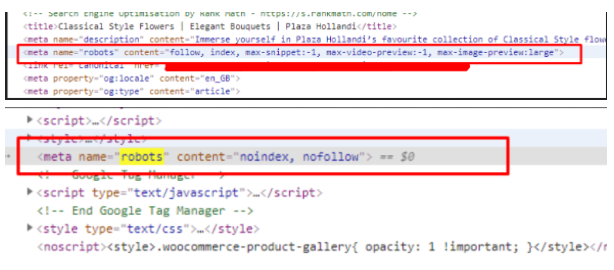
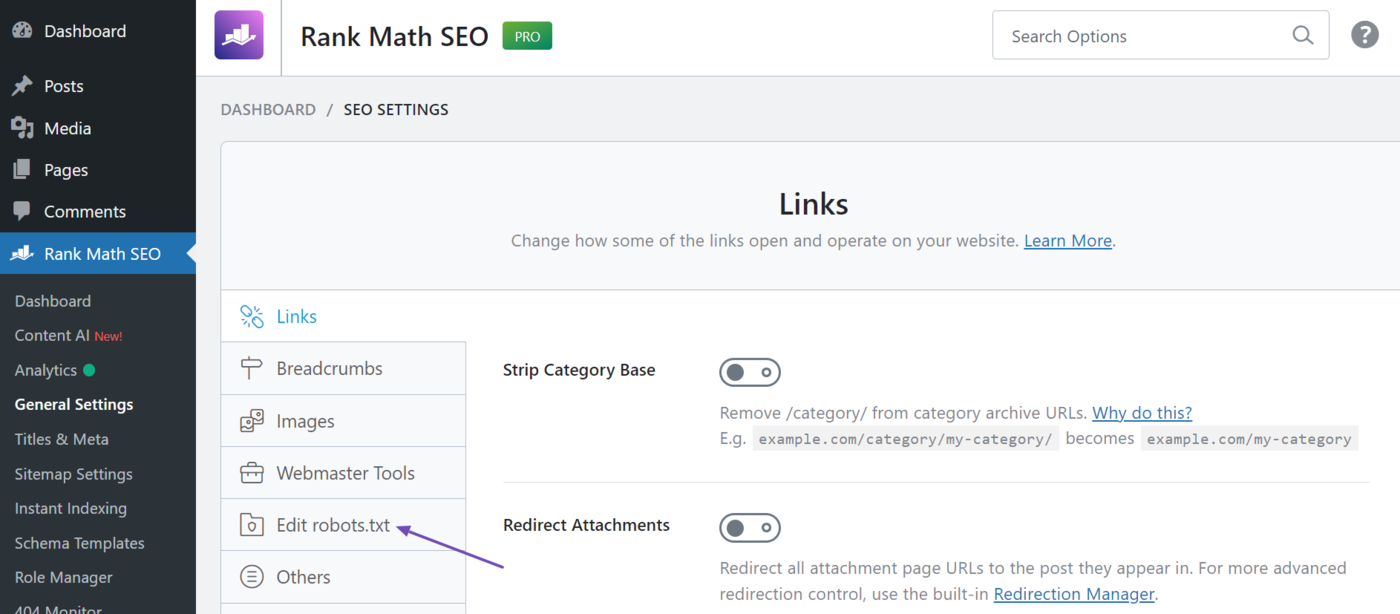
 Rank Math gives you page-level robots meta controls and global defaults, including noindex behaviors.
Rank Math’s documentation is explicit that noindex prevents the post from being indexed and displayed in search results.
Rank Math also documents common robots directives like noindex, nosnippet, and preview controls.
What to noindex on most content sites
-
Internal search result pages
-
Thin tag archives
-
Author archives on single-author sites
-
Attachment pages
-
Low-value utility pages that do not serve search intent
-
Thank you pages and checkout pages
-
Certain filtered views that create parameter duplicates
Why this influences rankings
If Google crawls and indexes large amounts of low-value pages, you get:
-
Lower average quality signals across indexed URLs
-
Slower recrawl of your best pages
-
Less stable rankings during core updates because your index footprint is messy
Rank Math’s controls help you shrink your index to pages that deserve to rank.
 A clean method inside Rank Math
-
Decide what you want indexed
-
Set global defaults in Titles & Meta
-
Use page-level overrides only when needed
-
Periodically review index coverage and clean up exceptions
This is “boring SEO” that improves performance over time.
5) XML sitemaps that improve discovery and prioritization
Sitemaps are not optional on serious sites.
Rank Math treats them as a core module, and their documentation explains the purpose clearly: a sitemap helps search engines navigate your site efficiently and gives you control over discovery.
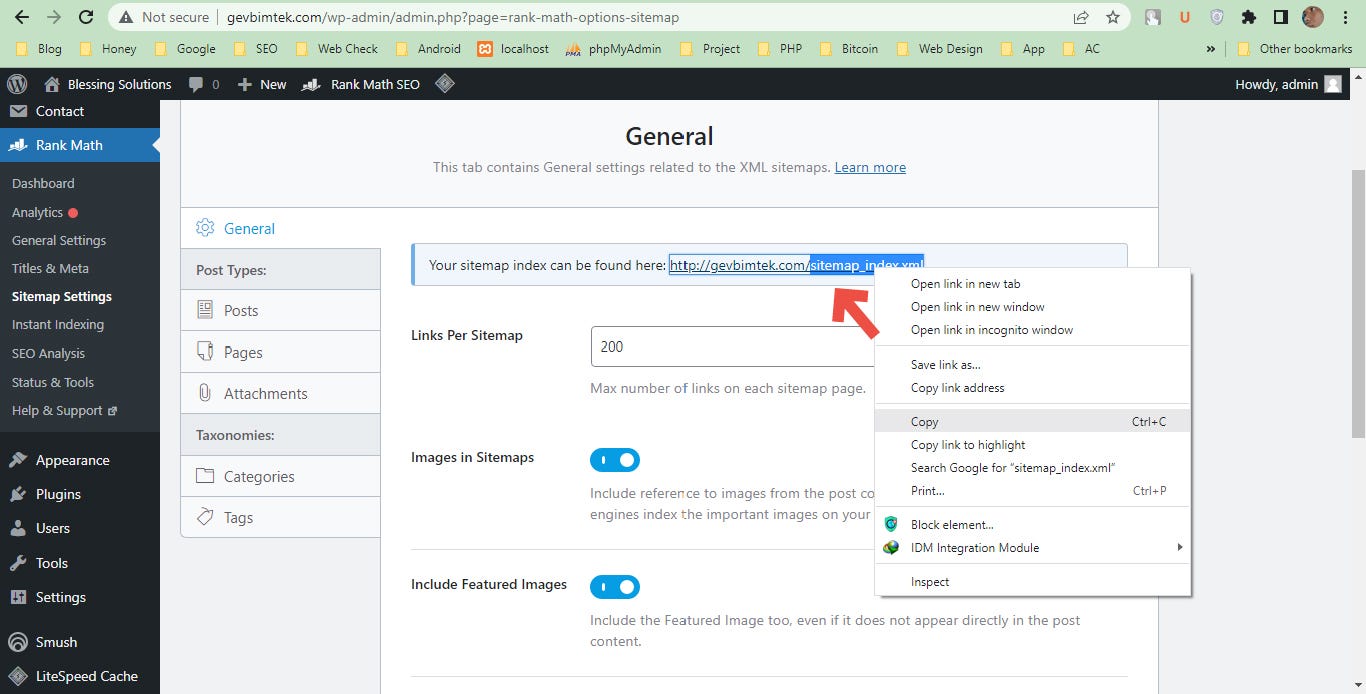 Image-worthy image
<img src=”https://rankmath.com/wp-content/uploads/2026/01/sitemap-settings.jpg” alt=”Rank Math menu showing Sitemap Settings” />
How sitemaps influence rankings in real terms
Sitemaps influence rankings indirectly by influencing:
-
How fast new pages are discovered
-
Whether deep pages get discovered at all
-
Whether important page types are treated as “known inventory”
-
Whether search engines waste time crawling unimportant URLs
Rank Math’s sitemap system matters because it is configurable and stable inside WordPress.
 Practical sitemap configuration rules
-
Include posts, pages, and money post types
-
Exclude thin archives unless they have real search value
-
Exclude parameter URLs
-
Keep attachment pages out of the index unless you have a deliberate reason
-
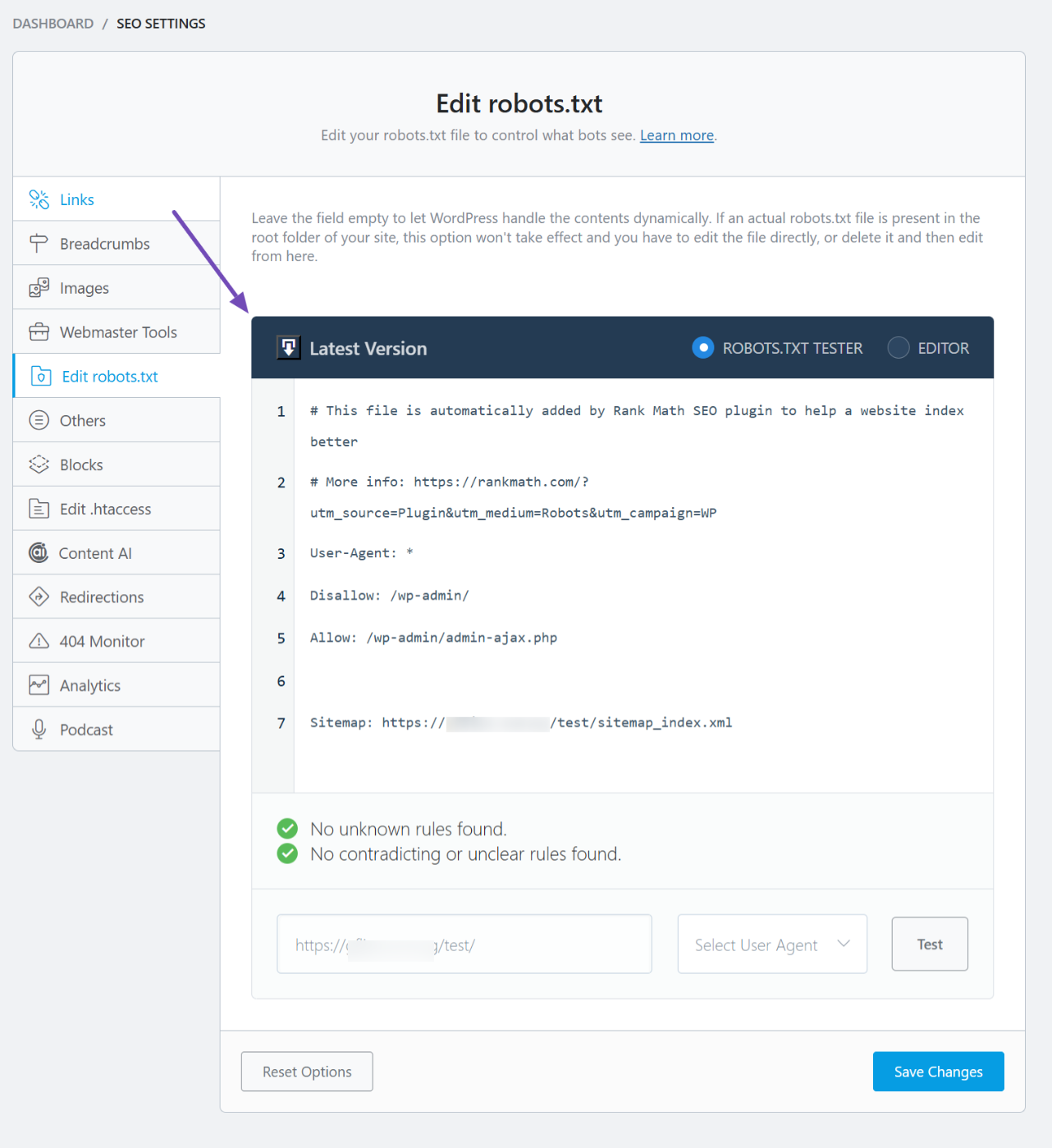
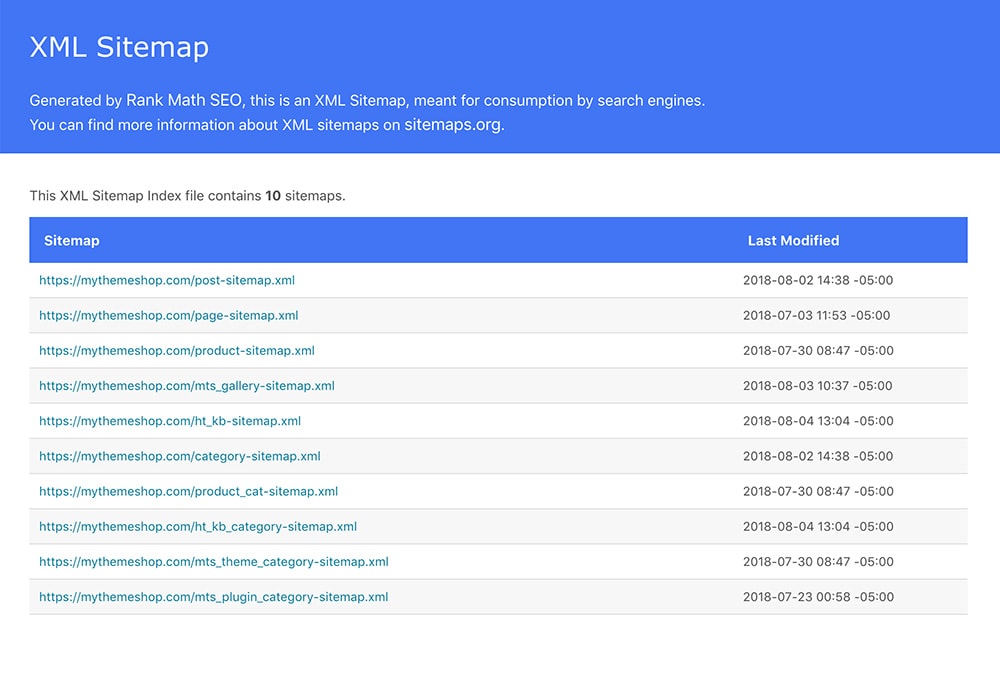
Make sure your sitemap is accessible and not broken by caching or security rules
Rank Math documentation even discusses that posts buried deep may not be indexed without an index-like structure, which is exactly what sitemaps provide.
6) News sitemap for fast surfacing of time-sensitive content
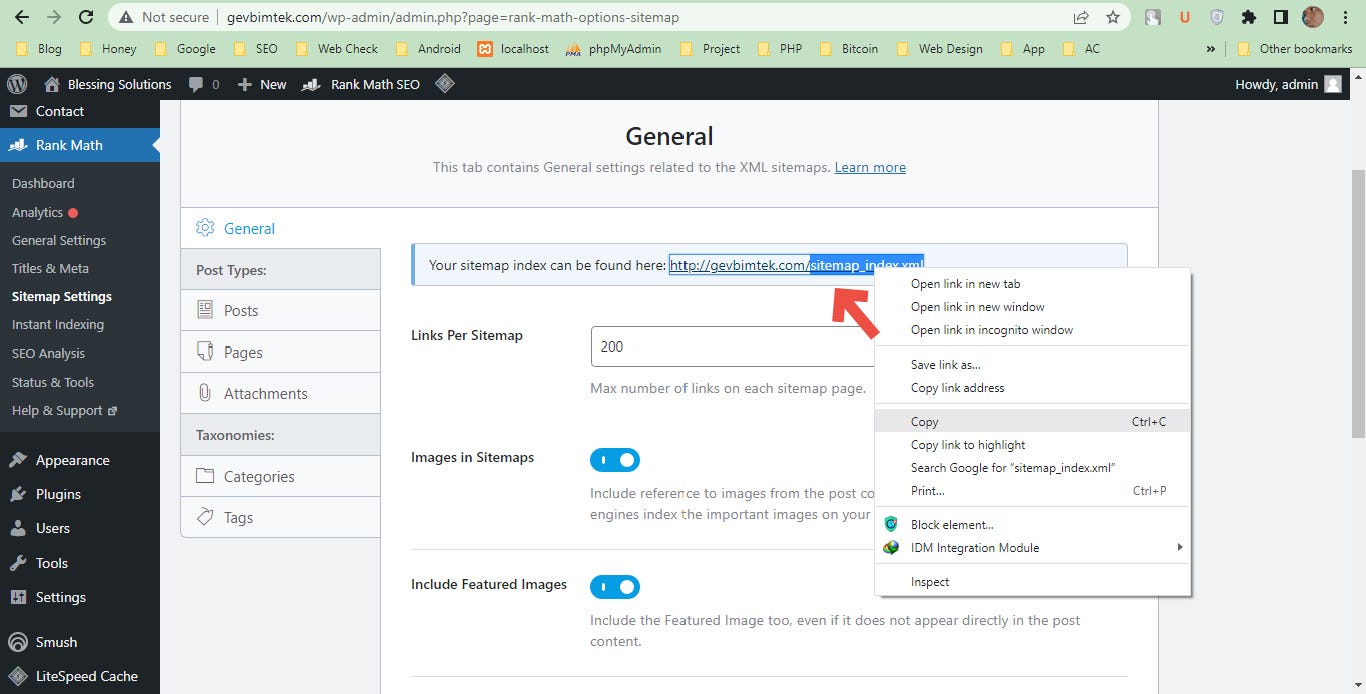
If you publish news-style content, trend coverage, or time-sensitive updates, Rank Math includes a News Sitemap module.
Rank Math’s documentation shows that this module is enabled from the Rank Math dashboard and depends on the sitemap module already being enabled.
 Why this influences rankings
Time-sensitive content lives or dies on discovery speed and freshness alignment.
A News sitemap does not guarantee top placement, but it reduces the friction between publishing and eligibility for Google News style surfaces where applicable.
Even if you do not run a “news site,” this can matter for:
-
Product launches
-
Major algorithm update coverage
-
Viral topic explainers
-
High velocity content categories
Use it only if you genuinely publish in a way that matches that ecosystem.
7) Schema generator for rich results and entity clarity
Schema is one of the most misunderstood “ranking” features.
Schema is not a direct ranking boost in most cases.
It is a visibility boost because it improves eligibility for rich results, and it reduces ambiguity about what a page is.
Rank Math markets its schema system as a major feature, including default schema support and multiple schema types.
Embed-worthy image
<img src=”https://rankmath.com/wp-content/uploads/2026/07/Enable-Schema-module-2.png” alt=”Rank Math modules with Schema module toggle” />
How schema influences rankings that matter
Schema influences outcomes through:
-
Rich results eligibility that increases CTR
-
Better matching to intent types (review, product, how-to, organization, local business)
-
Clearer entity mapping, especially when your site is building topical authority
CTR is not a vanity metric when your site is fighting in competitive SERPs.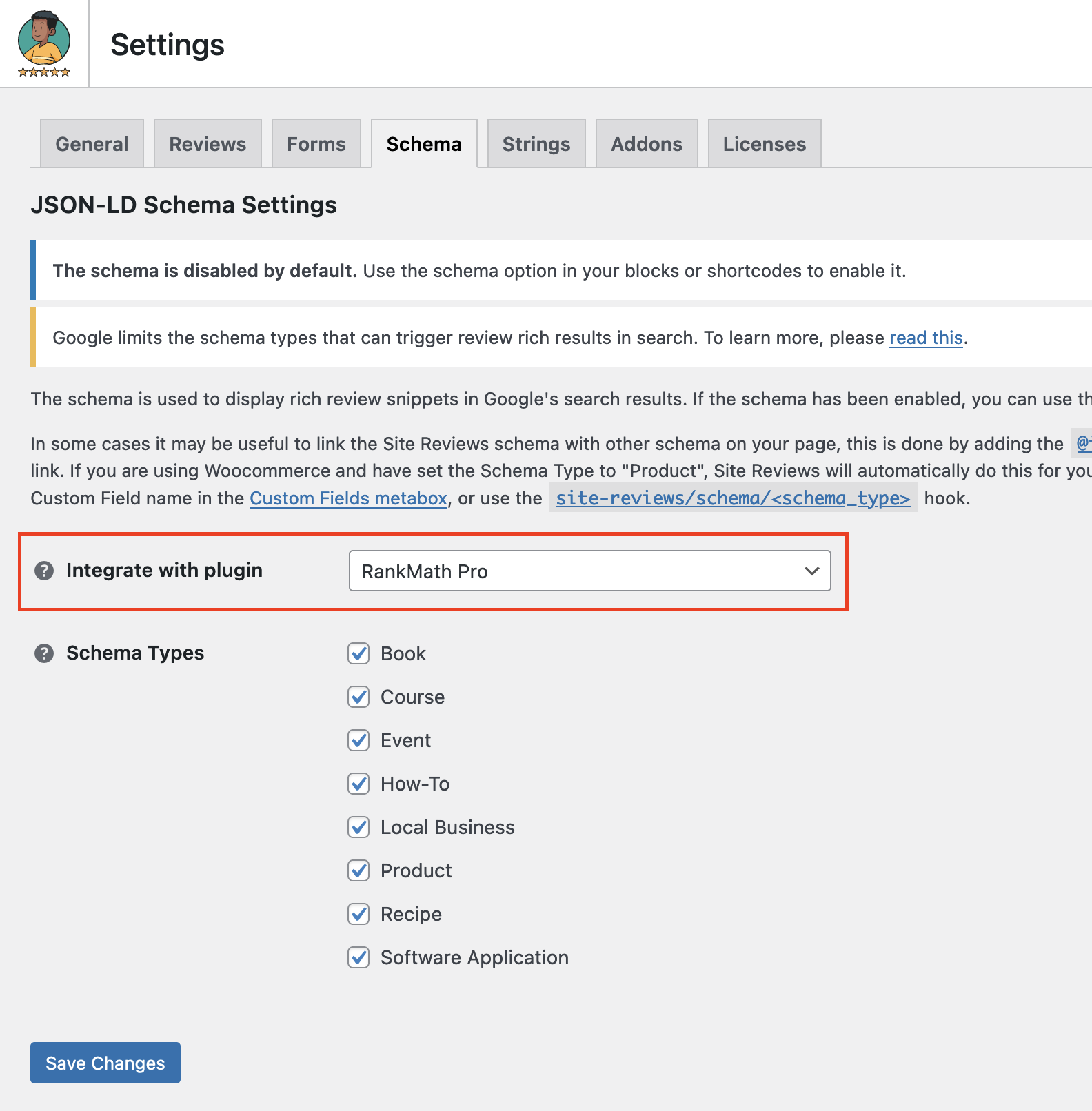
If two pages are close in relevance and link strength, the one that wins clicks and satisfies users tends to hold ground better over time.
Example: Review page schema
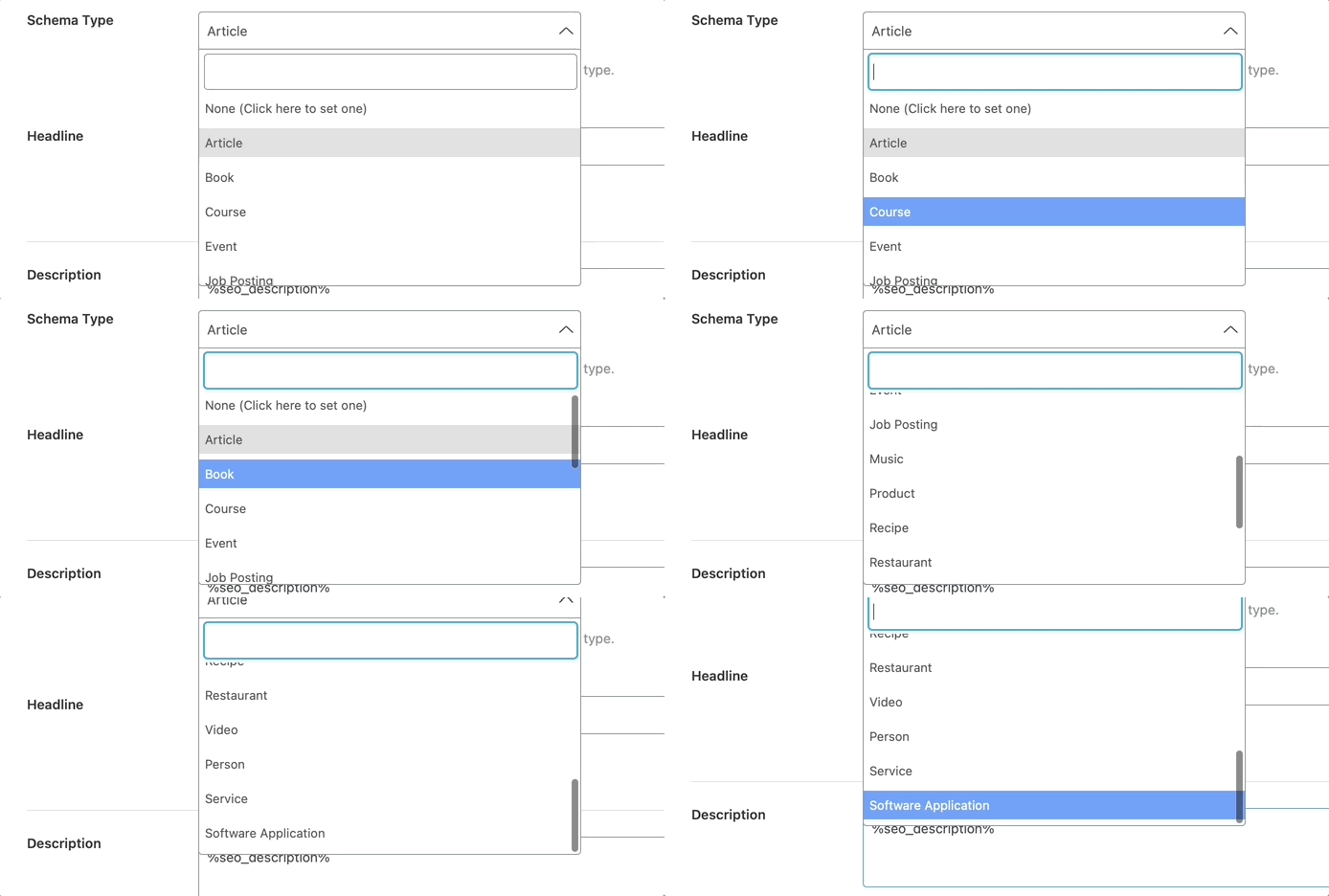 If you publish a review page, you want Google to understand:
-
This is a review
-
Here is the item being reviewed
-
Here is the rating if appropriate
-
Here are the core facts a searcher expects
Rank Math makes schema selection part of the page editing workflow so you can apply the correct structured data without hacking code.
8) Custom schema builder and schema templates for scale
Rank Math’s Custom Schema Generator is where advanced SEO sites separate themselves from “basic plugin users.”
Their documentation explains that you can build custom schema, save it, and reuse it as templates across posts and pages.
Embed-worthy image
<img src=”https://rankmath.com/wp-content/uploads/2026/01/custom-schema-builder.jpg” alt=”Rank Math custom schema builder interface” />
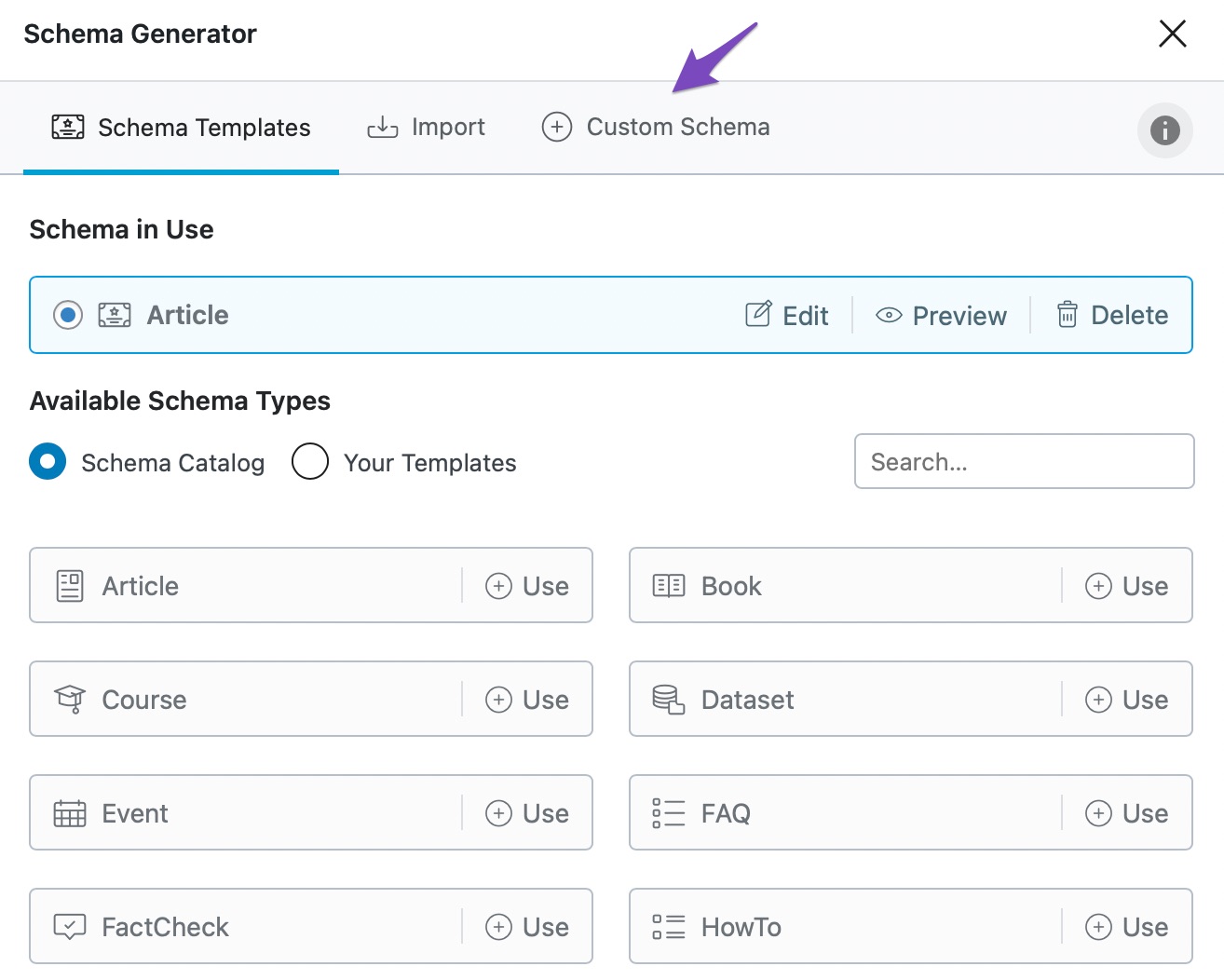 Why custom schema influences rankings
Because it solves two hard problems:
-
Consistency
-
Precision
If you run a site with hundreds of similar pages, your schema needs to be consistent. Google learns patterns.
Consistency increases the chance your pages are parsed cleanly and surfaced reliably.
If your site covers specialized content types, default schema options may not express what you want.
Custom schema lets you supply structured facts that match your content.
Example: Scaling schema for affiliate “best” lists
You publish 200 “best X” lists.
You want each page to include:
-
ItemList schema
-
Consistent properties for each item
-
A clear way to match list entries to product references
-
A consistent author and publisher identity
With templates, you can build once, then apply with minimal repetition.
Rank Math explicitly supports saving schema as templates and accessing them under Schema Templates.
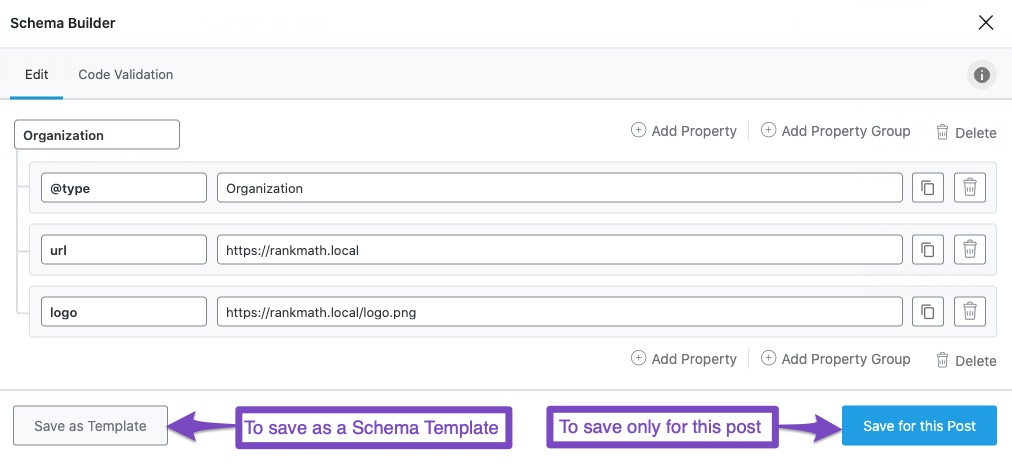 Practical workflow
-
Build your schema for one page
-
Validate with Google Rich Results Testing
-
Save as template
-
Apply to all pages of that type
-
Spot-check for errors after theme or content structure changes
Breadcrumbs are not decoration.
They are structure.
Rank Math states that breadcrumbs help users navigate and help search engines understand content hierarchy.
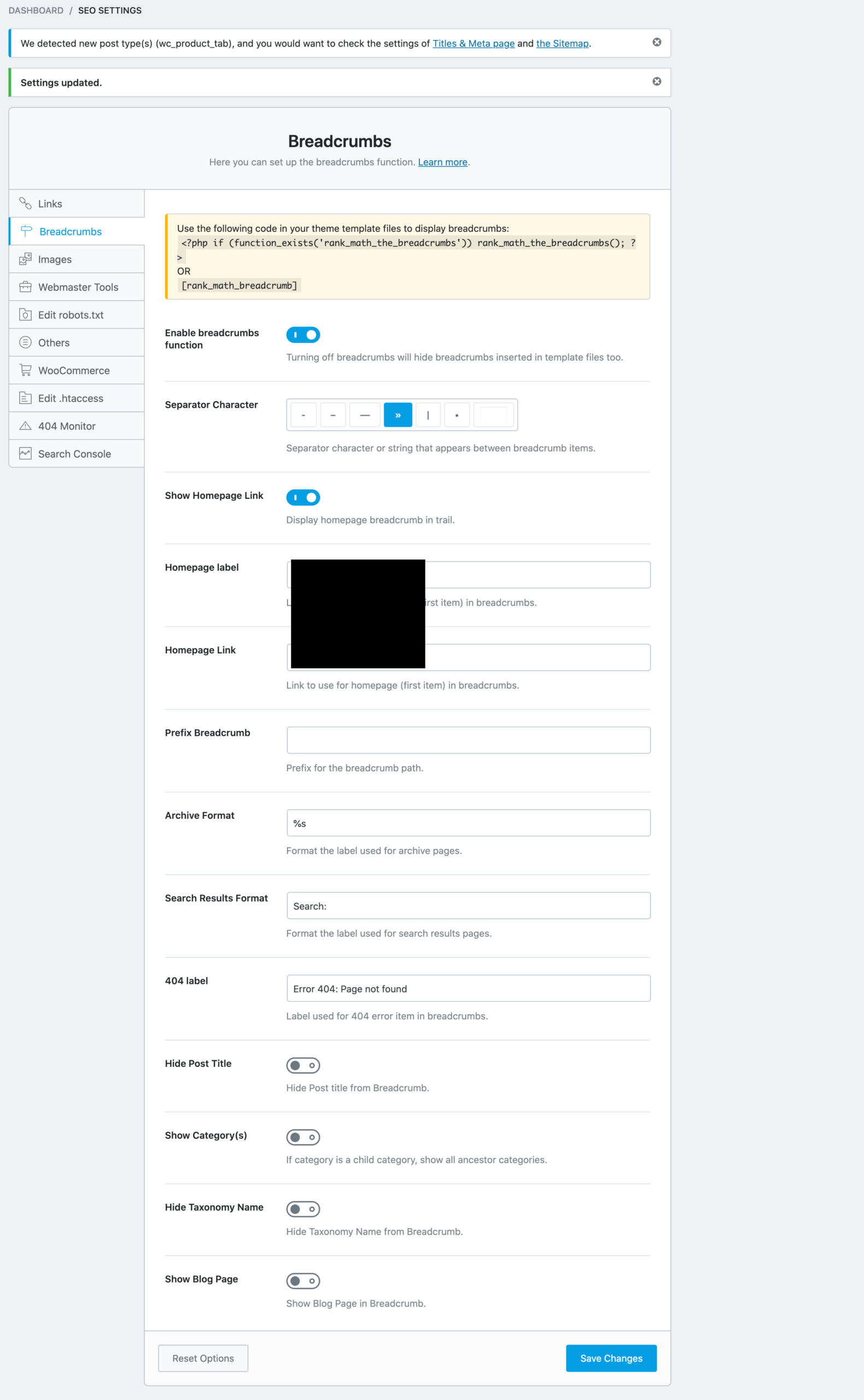 Rank Math also provides multiple ways to implement breadcrumbs including a shortcode:
 .
Embed-worthy image
<img src=”https://rankmath.com/wp-content/uploads/2026/02/Rank-Math-breadcrumbs-shortcode.png” alt=”Rank Math breadcrumbs shortcode in block editor” />
Why this influences rankings
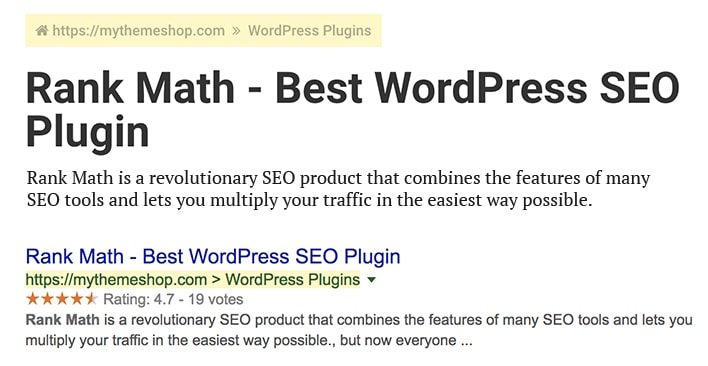 Clear hierarchy improves:
-
m nInternal linking clarity
-
How category and parent-child relationships are interpreted
-
Snippet presentation in some search interfaces
-
Site architecture signals, especially on large sites
Breadcrumb schema can also replace ugly URLs in the SERP display with a cleaner hierarchy trail, which can increase CTR in some niches.
Example that matters for affiliate sites
If you publish:
-
/amazon-fba/ (category hub)
-
/amazon-fba/best-label-printers/
-
/amazon-fba/best-shipping-software/
Breadcrumbs reinforce the relationship between the hub and the children. This is one of those “small signals” that becomes meaningful at scale.
10) Redirections that preserve link equity during changes
Links are still one of the strongest ranking inputs. Not “backlinks” as a buzzword, but actual equity and trust flowing through URLs.
When a URL changes, you either preserve that equity or you lose it.
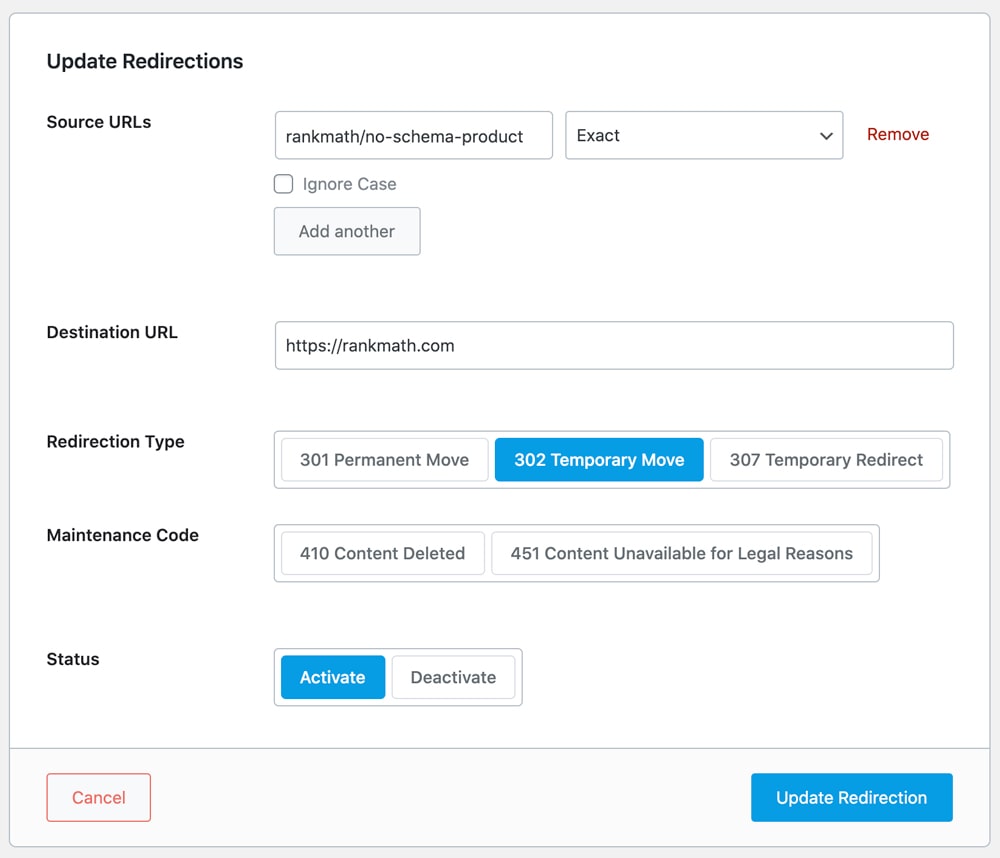
Rank Math includes a Redirection Manager and pairs it with 404 tracking.
The WordPress plugin listing highlights built-in 404 monitoring and redirection management as core features.
 How redirections influence rankings
-
Preserve inbound link equity when URLs change
-
Prevent 404 errors from bleeding authority
-
Consolidate duplicate versions of content
-
Keep users from bouncing due to missing pages
-
Keep internal links from pointing to dead ends
Best practice rules
-
Use 301 redirects when content has moved permanently
-
Redirect old URL to the most relevant new URL, not just the homepage
-
Avoid redirect chains
-
Avoid redirect loops
-
Update internal links after redirecting, so crawlers hit the final destination directly
Real example
You change:
-
/rank-math-review/to/rank-math-review-2026/
If the old URL has links, shares, and indexed history, a correct 301 is the difference between “kept most of the value” and “threw it away.”
Rank Math makes this manageable inside WordPress without needing server rules for every change.
11) 404 Monitor that exposes equity leaks and crawl waste
Rank Math’s 404 Monitor is one of the most directly ranking-relevant features in the plugin.
Why? Because broken URLs are not just a user experience issue. They are an SEO system issue:
-
Crawlers waste time requesting dead URLs
-
Internal link equity drains into nothing
-
External links land on 404 and lose the chance to pass value
-
Index coverage gets messy
-
Your site looks less maintained
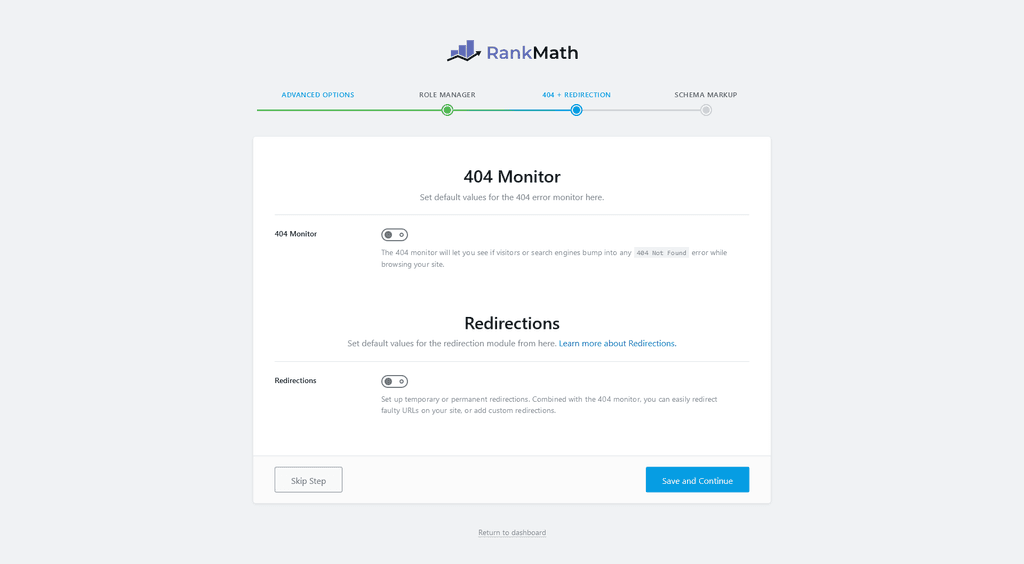 Rank Math’s documentation explains that captured 404 errors are visible in the 404 Monitor and that you must enable the module from the Rank Math dashboard.
Embed-worthy images
<img src=”https://rankmath.com/wp-content/uploads/2026/01/404-monitor-3.jpg” alt=”Rank Math module screen showing 404 Monitor toggle” />
<img src=”https://rankmath.com/wp-content/uploads/2026/09/Rank-Math-Advanced-404-Monitor-errors-recorded.jpg” alt=”Rank Math Advanced 404 Monitor table view” />
 How to use 404 Monitor like an SEO
Do not treat all 404s the same. Rank Math’s own 404 fixing tutorial stresses decision-making and outlines three approaches: fix the source, redirect, or ignore.
Here is the practical approach:
-
Sort by hits
Fix URLs that real users and crawlers hit often. -
Check referrer
If it is internal, fix the internal link first. -
Decide if the URL should exist
If it was a real page that moved, redirect it.
If it is junk from bots, ignore or block at server level if needed. -
Use redirects sparingly but correctly
Too many sloppy redirects create chains and confusion.
This single workflow often recovers rankings that “mysteriously dropped” after site edits.
12) Instant Indexing plugin and Indexing API workflows
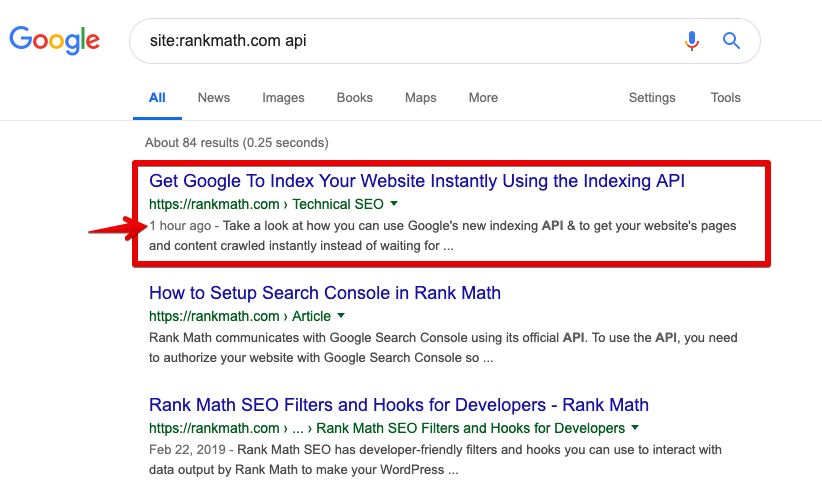
Rank Math provides a separate Instant Indexing plugin that integrates with Google’s Indexing API.
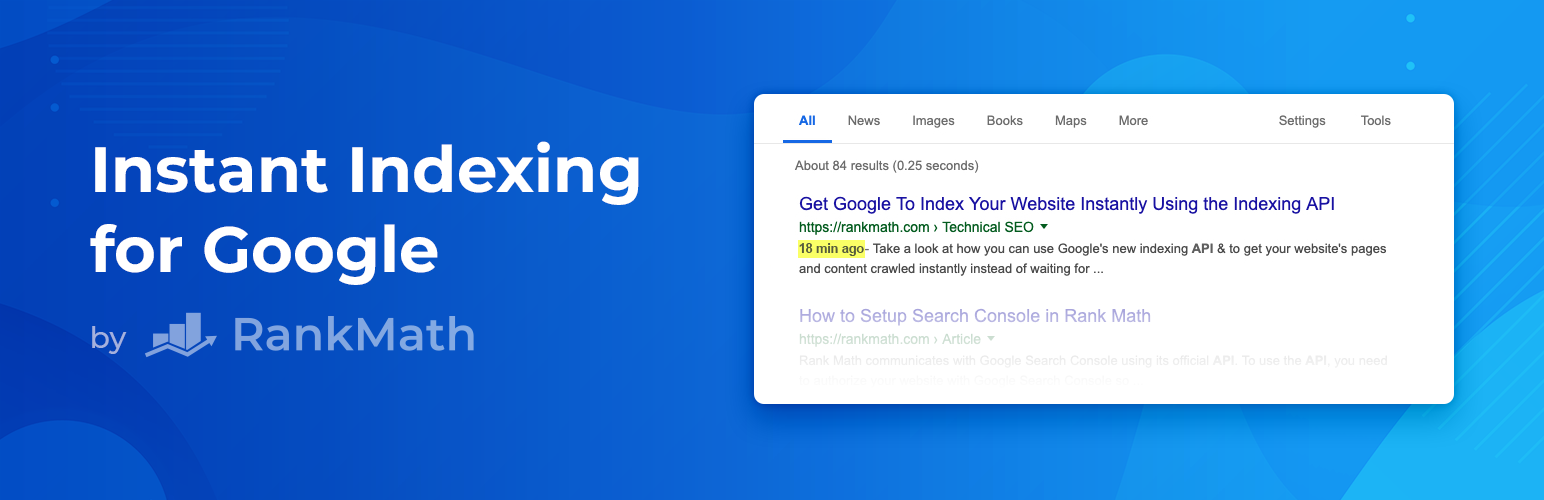 Rank Math’s own Instant Indexing page includes an important warning: Google recommends using the Indexing API only for Job Posting and Live Streaming websites, and Rank Math notes you should proceed with caution.
That warning matters. This is a powerful tool, not a toy.
Embed-worthy images
<img src=”https://rankmath.com/wp-content/images/plugins/instant-indexing/Google-Instant-Indexing-API-Settings.jpg” alt=”Rank Math Instant Indexing settings screen” />
How this can influence rankings
Indexing speed influences rankings when:
-
You are competing on freshness
-
You publish time-sensitive content
-
You update important pages and need recrawl sooner
-
You fix critical errors and want Google to reflect changes sooner
Indexing speed does not guarantee better ranking. But it shortens the time between improvement and recognition.
 A safe, practical way to use it
-
Use it for pages where timing matters
-
Use it when you make major corrections to a ranking page
-
Do not spam indexing requests for every minor edit
-
Monitor results through Search Console and Rank Math analytics rather than assuming it worked
Used responsibly, this is one of the few WordPress-side features that can change how quickly your SEO work shows up in the real world.
13) Analytics module inside WordPress for faster iteration
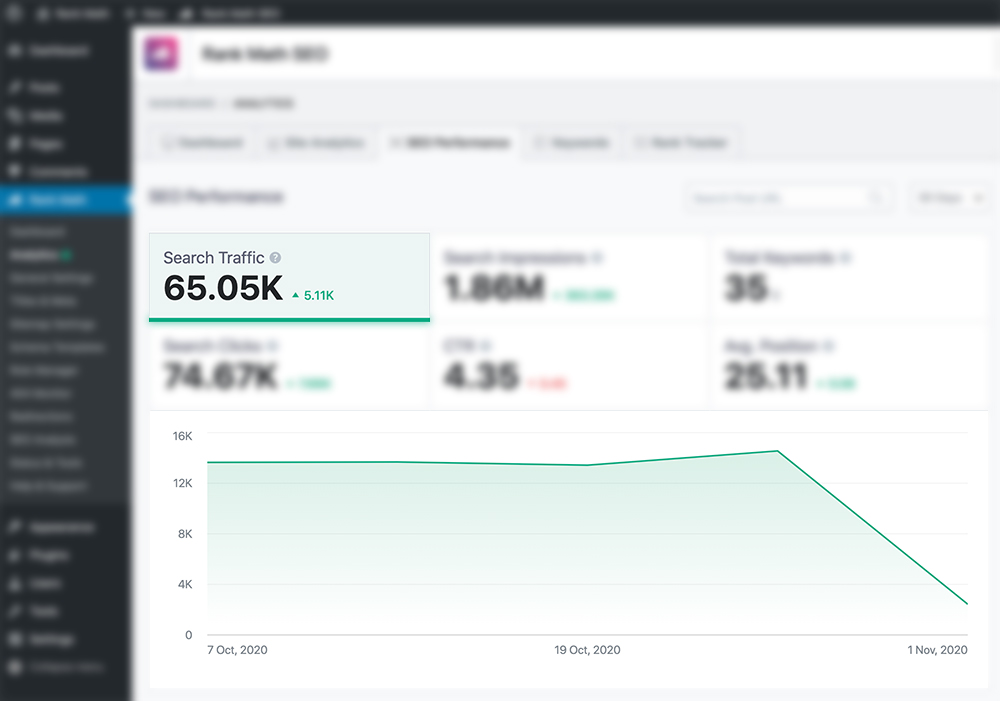
Rank Math includes an Analytics module that connects with Google services and brings data into your WordPress dashboard.
Rank Math’s documentation explains that you enable the Analytics module, connect your Google account, and then Rank Math combines Search Console and analytics data into graphs and insights.
Why this influences rankings
Because the ranking process is iterative.
If you shorten the feedback loop, you improve faster:
-
Identify pages losing clicks
-
Identify keywords gaining impressions but missing CTR
-
Identify indexing issues early
-
Identify content types that are growing and replicate them
This is not “analytics for reporting.” It is analytics for decision-making.
Practical examples inside the workflow
-
A page ranks position 6 for a high-intent query but CTR is low. You rewrite the title and meta to better match intent.
-
A post is not indexed weeks after publishing. You discover it was excluded from sitemap or accidentally noindexed.
-
A cluster of pages loses impressions after a template change. You catch it fast and roll back.
Rank Math makes these checks less annoying because they happen inside the same place you publish content.
14) Google index status signals in admin
Rank Math promotes “Google Index Status” through integration with Google’s systems, including URL inspection style signals that show index presence and crawl details.
Why it matters
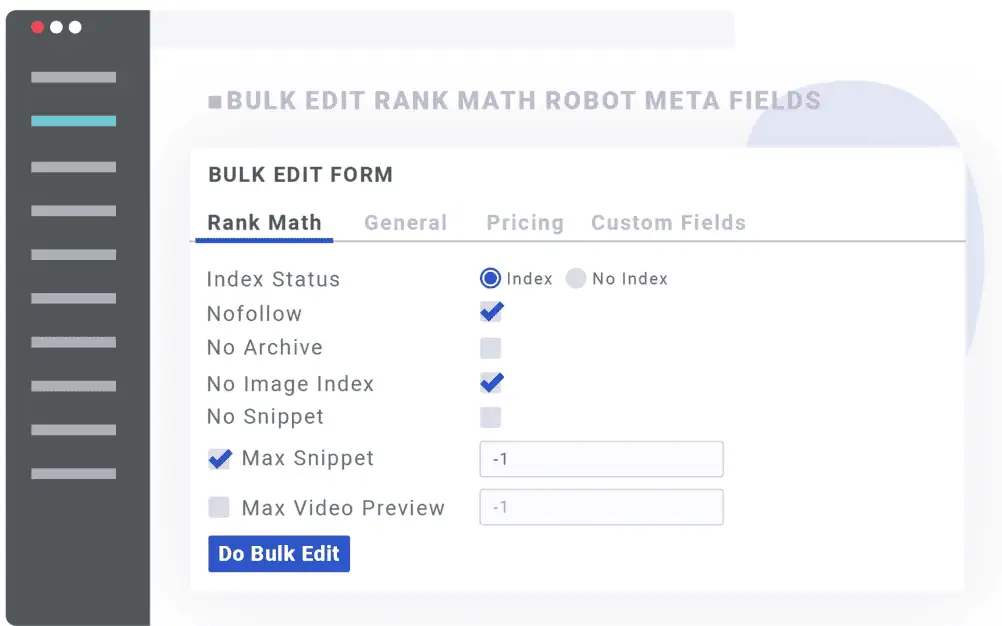 Indexing is not a one-time event. It is an ongoing state.
A page can be:
-
Discovered but not indexed
-
Indexed but not ranking
-
Indexed but canonicalized elsewhere
-
Indexed but crawled rarely
-
Crawled but blocked from indexing by robots meta
If you can see index state quickly, you reduce the time you spend guessing why a page is not performing.
How to use it
-
When a page should rank but does not appear in the index, check index status first
-
When you update a major page, monitor recrawl timing
-
When you consolidate pages, confirm canonical and index behavior
Rank Math makes this part of normal publishing operations rather than an “only when something breaks” task.
15) SEO Analyzer and on-page checks that prevent technical misses
Rank Math includes an SEO Analysis feature and site checks that help you catch issues before they turn into ranking problems.
The Rank Math feature page lists SEO analysis as part of its broader suite.
Why this influences rankings
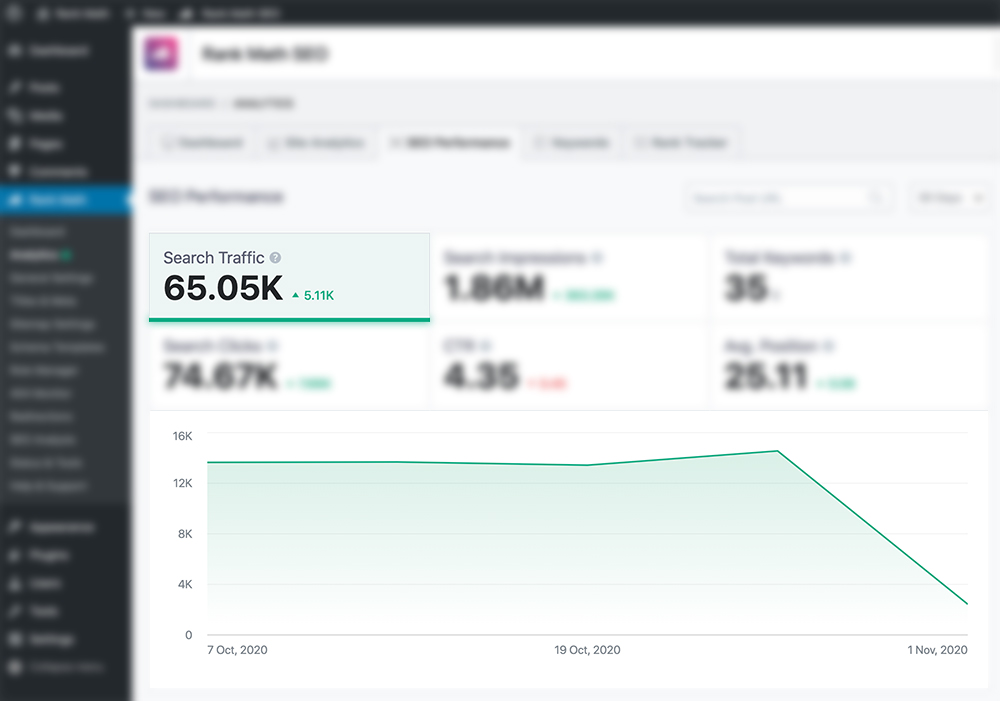 Because many ranking losses come from small, compounding mistakes:
-
Missing canonical tags after theme changes
-
Broken schema markup after template edits
-
Noindex accidentally applied to key pages
-
Sitemap disabled, blocked, or cached incorrectly
-
Redirect chains after URL cleanups
-
Internal links pointing to outdated URLs
An analyzer is not a replacement for expertise.
It is a safety net that reduces expensive oversight.
The right way to use it
-
Run checks after major changes: theme swaps, migrations, permalink edits
-
Use it as a “preflight” before publishing large batches
-
Do not obsess over scoring systems that do not map to search intent
Rank Math’s analyzer is useful when you treat it like a checklist for prevention, not a scorecard for ego.
16) Link attributes and affiliate link handling that keeps trust clean
Affiliate sites have an extra burden: link intent must be clean.
Rank Math includes settings like “NoFollow External Links” and their documentation explicitly notes it is recommended only if all external links are affiliate or sponsored links, and it supports inclusion and exclusion lists.
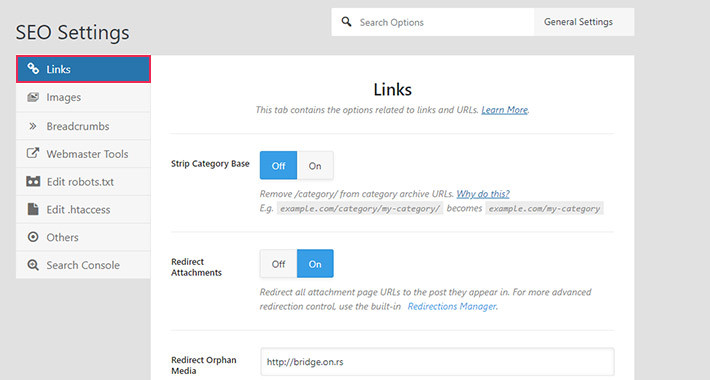 Why this influences rankings
Because link patterns influence trust.
If your site looks like it exists only to send users away through commercial links, that changes how algorithms and manual reviewers interpret it.
This is not about one “nofollow toggle.” It is about making your linking behavior consistent and honest:
-
Sponsored and affiliate links should be marked appropriately
-
Editorial references should remain normal followed links when they are genuinely editorial
Rank Math makes it easier to apply consistent policies at scale, which is the real value here.
Practical configuration for an affiliate publisher
-
Do not blanket nofollow every external link unless your site truly has no editorial citations
-
Use domain-based inclusion and exclusion lists
-
Keep informational citations followed when they help users and support claims
-
Mark affiliate links consistently
This is “monetization hygiene,” and it affects long-term stability more than most people admit.
17) Image SEO controls that improve image search and snippets
Image SEO is not only about ranking in Google Images. It is also about:
-
Thumbnails in search
-
Page rendering and user experience
-
Clear content understanding through alt text
-
Accessibility signals
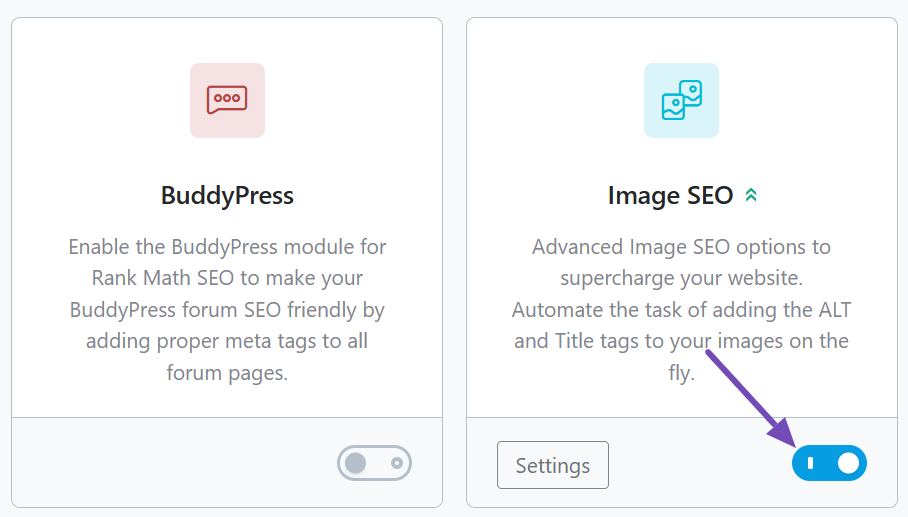 Rank Math includes Image SEO features as part of its broader feature set on WordPress.org.
How it influences rankings
-
Better accessibility and relevance through consistent alt attributes
-
Better image discovery for queries with visual intent
-
Better on-page experience when images are handled consistently
Practical examples
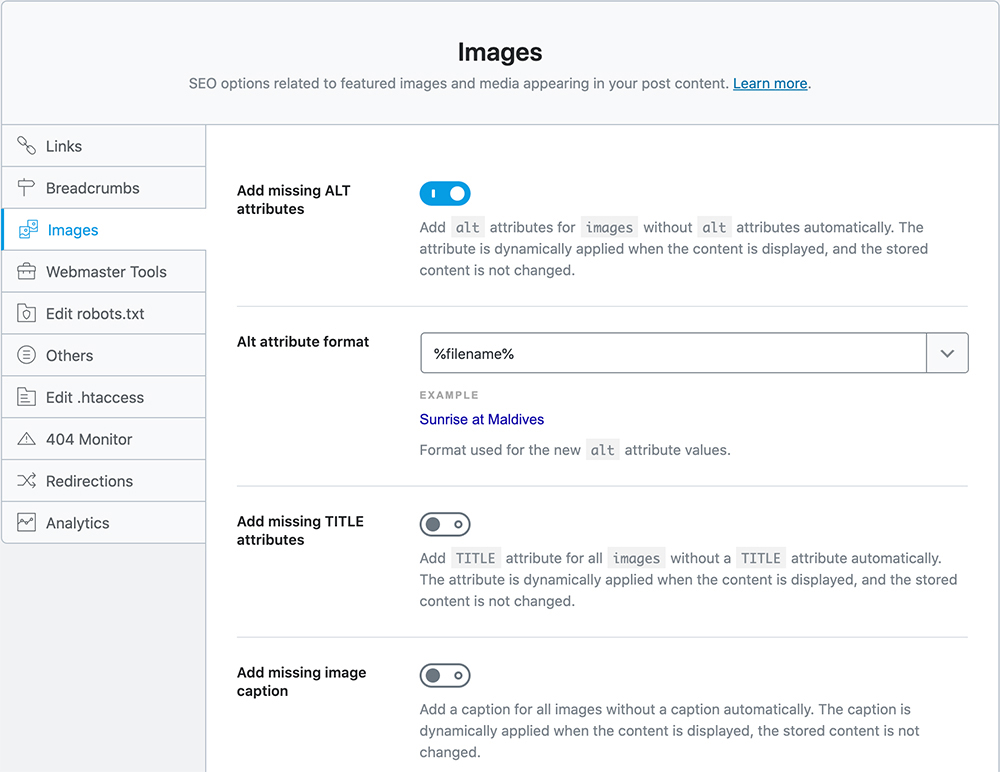 If you publish “best” lists, your images often become the first visual impression in the SERP preview and in social shares. A consistent image policy helps:
-
Use descriptive alt text that matches what the image actually shows
-
Avoid keyword spam
-
Compress images separately, but keep naming and metadata clean
Rank Math helps with automation here, but you still need editorial standards.
18) Local SEO module signals for local intent queries
Local SEO is not just “add a map.” It is structured identity.
Rank Math supports structured data and site identity signals, and it is commonly used to add Local Business style markup where appropriate.
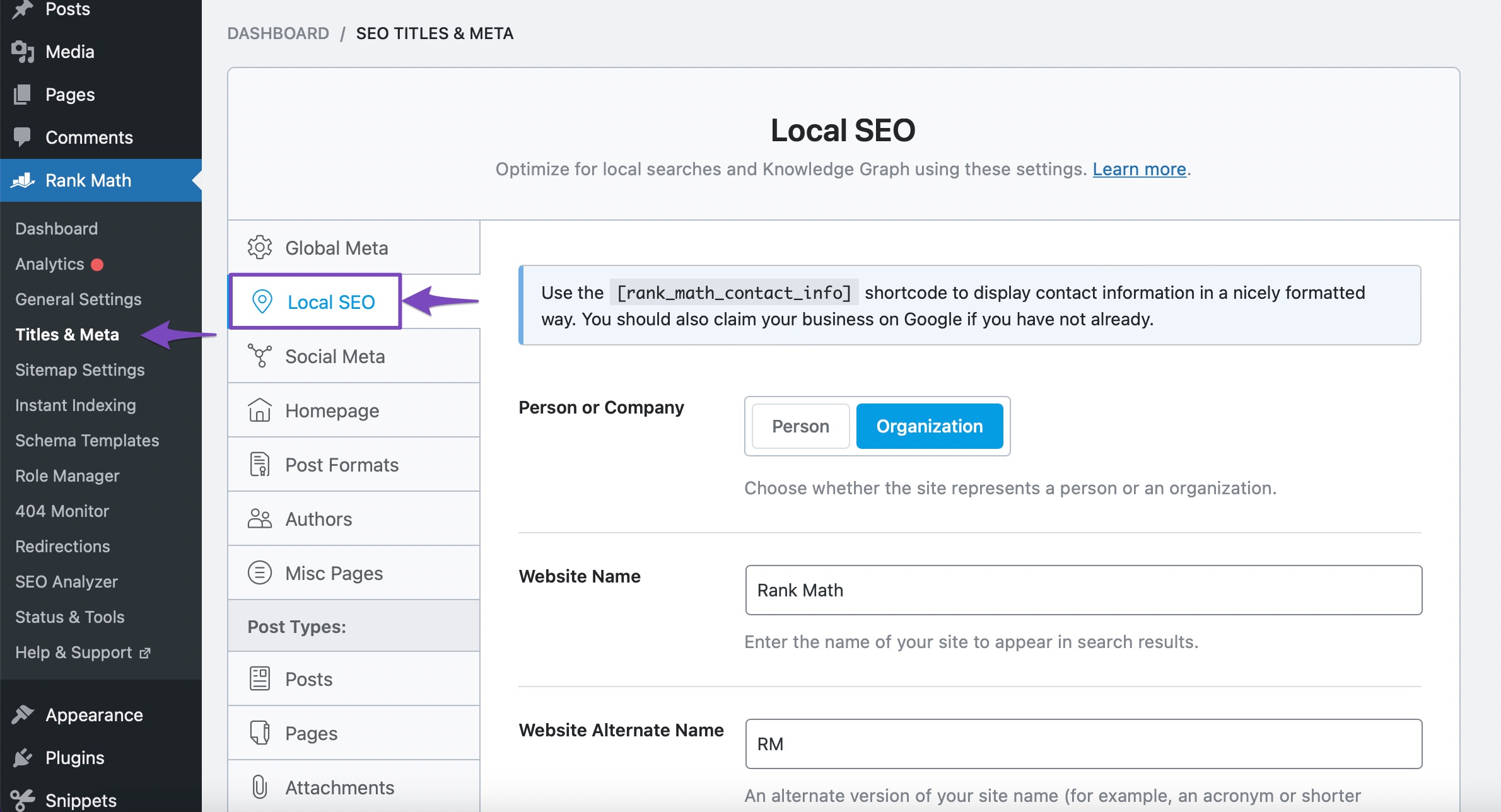 That ties into Rank Math’s core schema system, which they position as a major feature.
Why it influences rankings
Local results are heavily influenced by:
-
Clear business identity
-
Consistent NAP style signals
-
Local relevance cues
-
Structured data that matches the business type
Rank Math’s role here is making local structured signals easier to implement inside WordPress so Google can interpret the site correctly.
Practical use case
If you run:
-
A service business site
-
A local store site
-
A location-based brand
Then local structured signals matter because they influence eligibility for local packs and map-style surfaces.
If you do not run a local business, do not force local markup.
Wrong schema is worse than no schema.
19) WooCommerce SEO features for product and category rankings
WooCommerce sites have ranking challenges that normal blogs do not:
-
Product pages with variants
-
Category pages that act like hubs
-
Sorting and filter parameters
-
Thin tag archives created by plugins
-
Duplicate product URLs through parameters and session IDs
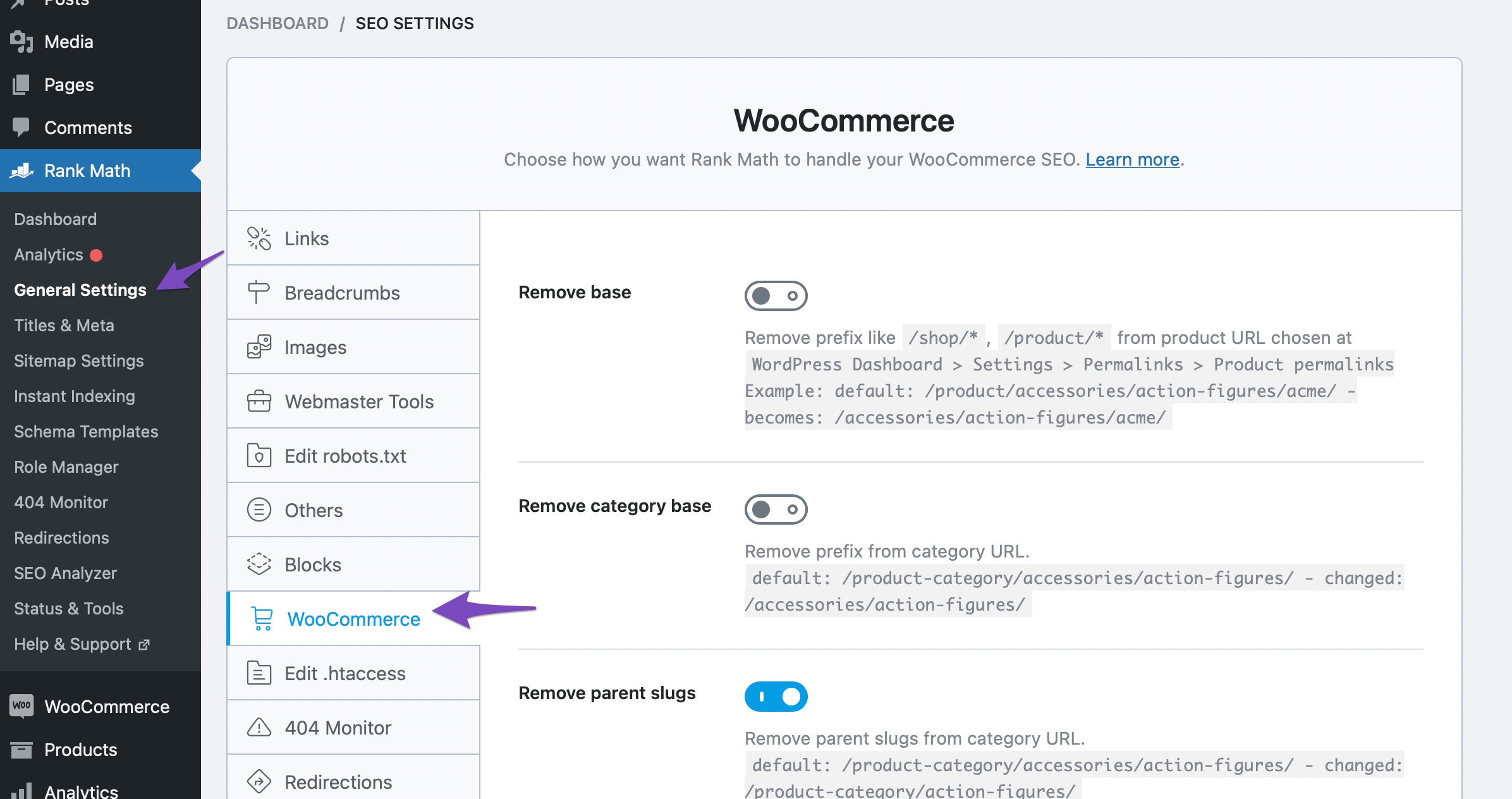 Rank Math supports WooCommerce SEO as part of its ecosystem and provides structured approaches through schema and metadata controls.
How it influences rankings
-
Product schema and clear product identity signals
-
Clean canonical handling for filtered and sorted views
-
Better control over indexability of low-value archives
-
Better site architecture through breadcrumbs and category hierarchy
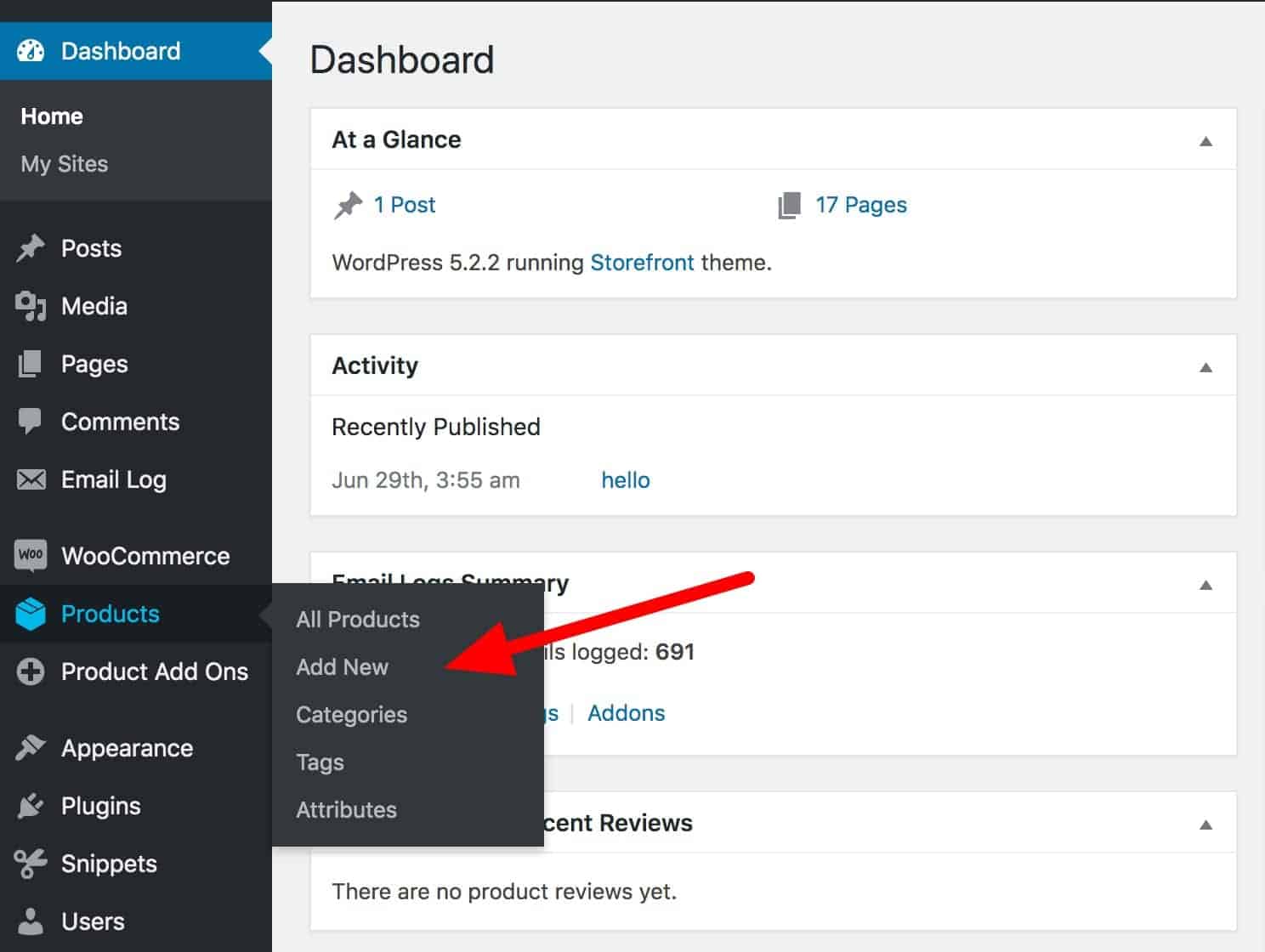
Practical configuration principles
-
Keep product pages indexable if they are real inventory pages
-
Noindex thin tag pages and internal filter pages unless they have real search demand
-
Canonical filtered views to the main category where appropriate
-
Use schema carefully so you do not mark non-product pages as products
Rank Math gives you controls. You still need judgment.
20) Performance and modular design that reduces SEO drag
Speed is not a nice-to-have.
It influences rankings through:
-
Core Web Vitals
-
Crawl efficiency
-
User satisfaction signals
-
Conversion performance on money pages
Rank Math argues that it is lightweight, uses fewer resources, and has fewer lines of code compared to alternatives, positioning itself as performance-friendly.
The bigger ranking point is not a benchmark claim. It is the modular design:
-
You enable only what you use
-
You reduce plugin overlap
-
You reduce the chance two plugins fight over metadata, schema, and canonicals
SEO problems often come from conflicts, not from missing features.
Rank Math’s modular approach reduces conflict opportunities when you keep your stack clean.
21)Large Language Models and the Next Layer of Affiliate SEO
Search is no longer mediated only by blue links.
Large Language Models are now part of the discovery layer. Google’s AI Overviews, Bing Copilot, and other LLM-driven interfaces summarize, compare, and recommend content without requiring users to click through in the traditional way.
This changes the role of affiliate content.
Pages are no longer competing only to rank. They are competing to be understood, extracted, and cited by language models.
This is where Rank Math’s LLM-focused features matter.
Rank Math has begun optimizing for machine comprehension, not just human readability or crawler i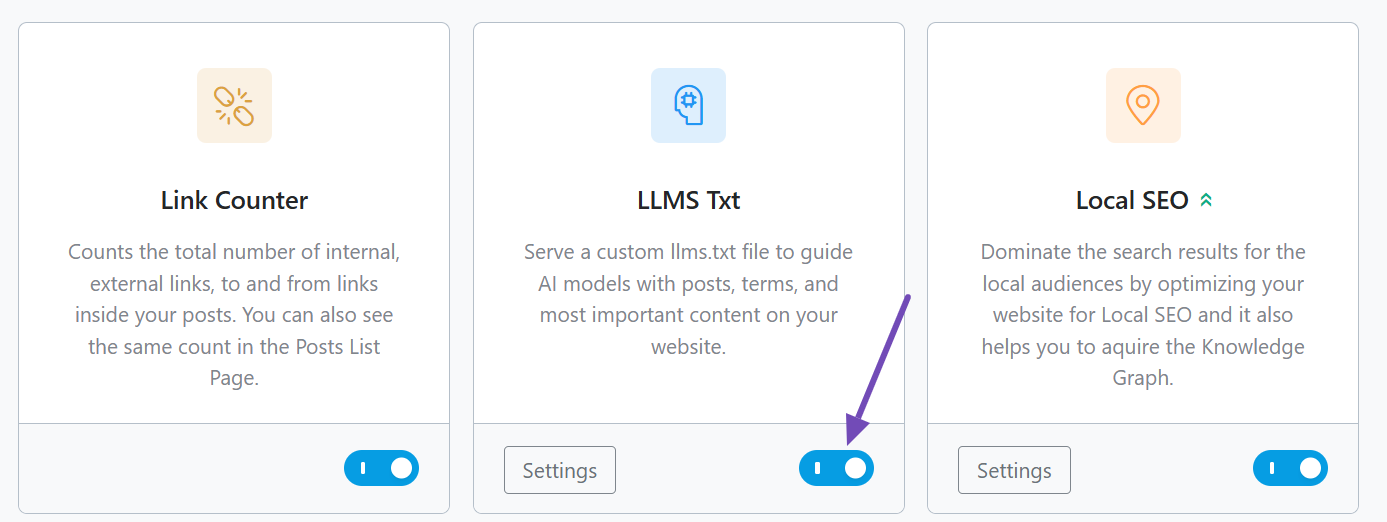 nterpretation. Its schema system, content structuring, and AI-assisted guidance are designed to produce content that LLMs can parse cleanly and reuse accurately.
For affiliates, this is critical.
LLMs favor content that is:
-
Explicit in structure
-
Clear in definitions
-
Balanced in evaluation
-
Consistent in terminology
-
Grounded in experience
Rank Math’s emphasis on structured data, pros and cons, entity clarity, and semantic coverage feeds directly into how language models summarize information.
A vague review may rank today.
A precise review will be cited tomorrow.
LLMs do not reward persuasive copy.
They reward clarity. They extract facts, tradeoffs, and conclusions.
Pages built with Rank Math’s schema and semantic discipline are easier for these systems to interpret correctly.
This creates a new competitive advantage.
Affiliate sites that are LLM-readable are more likely to appear in AI-generated answers, recommendation panels, and conversational search results. Sites that rely on fluff or generic phrasing are ignored or misrepresented.
Rank Math is positioning affiliate sites for search without clicks, where being the source matters more than being the destination.
That shift is already underway.
Why This Matters More Than Rankings
The future affiliate threat is not lower rankings.
It is disintermediation.
If LLMs summarize reviews without attribution, affiliates lose traffic. If they cite sources, affiliates who structure content clearly win.
Rank Math’s LLM-aware approach increases the likelihood that your site becomes a reference, not just a result.
This aligns with everything else in the article:
-
Schema enables extraction
-
Pros and cons enable summarization
-
Semantic coverage enables trust
-
Structured intent enables accurate recommendations
In other words, Rank Math is not only built for Google’s current algorithms.
It is built for how machines explain content, not just rank it.
That is the next phase of affiliate SEO.
22) Rank tracking inside Rank Math for faster SERP feedback
Rank Math includes rank tracking features and position history displays as part of its suite.
Embed-worthy image
<img src=”https://rankmath.com/wp-content/images/popup/rank-tracking-popup.jpg” alt=”Rank Math rank tracking table with clicks, impressions, CTR” />
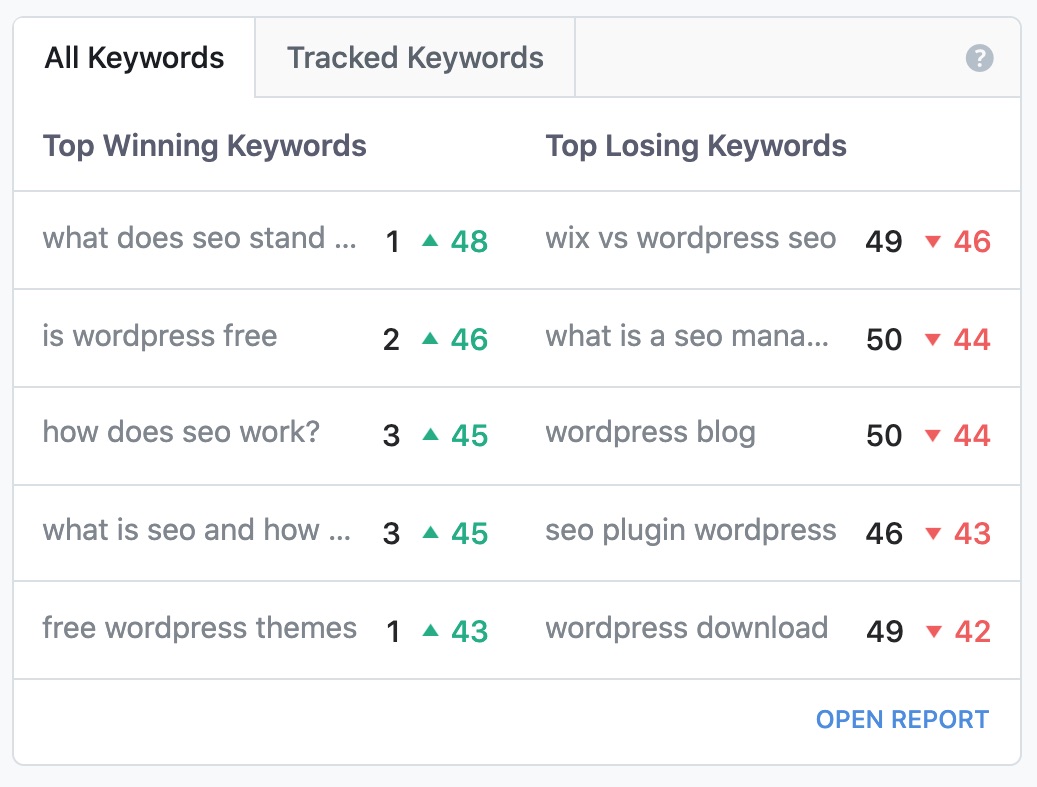 This matters because SEO without measurement becomes superstition. You publish, you hope, you guess.
Rank Math pulls rank-style feedback closer to your publishing workflow, which makes it easier to update pages that are already close to winning.
Content AI as the Control Layer for Affiliate Intent and LLM Readability
Content AI is often misunderstood because most tools market “AI writing” as speed.
Speed is irrelevant in affiliate SEO.
The problem affiliates face is not producing words.
It is producing the right signals consistently, across dozens or hundreds of monetized pages, in an environment where both search engines and large language models evaluate credibility at scale.
Rank Math’s Content AI was not built to generate content.
It was built to engineer relevance.
Instead of asking, “What should I write?”, Content AI asks a more important question:
“What patterns are already winning for this specific commercial intent?”
Competitive Intent Mapping, Not Guesswork
When you enter a keyword into Content AI, it does not rely on abstract best practices.
It analyzes the pages currently ranking for that query and extracts common structural and semantic signals.
For affiliate content, this is critical.
Buyer-intent keywords are narrow.
The margin for error is small. Missing one expectation can drop a page several positions.
Content AI identifies:
-
Core subtopics that Google expects to see addressed
-
Commercial modifiers that signal expertise rather than promotion
-
Terminology consistency across top-performing pages
-
Structural depth required to compete, not arbitrary word counts
This prevents two common affiliate failures.
The first is underbuilding content that never earns trust.
The second is overbuilding content that dilutes clarity and intent.
Content AI anchors pages to market reality, not theory.
Content AI and the Helpful Content System
The Helpful Content system does not reward originality for its own sake. It rewards useful completeness.
Affiliate pages are judged on whether they help users finish a decision.
Content AI supports this by surfacing:
-
People Also Ask questions tied to commercial queries
-
Comparison angles users expect before choosing
-
Objections that credible reviews address openly
This leads to content that feels anticipatory rather than reactive.
Instead of adding sections after rankings stall, affiliates build pages that resolve uncertainty from the first publish.
That is exactly what Google now rewards.
23)Content AI as an LLM Alignment Tool
This is where Content AI quietly becomes more important than most affiliates realize.
Large Language Models do not read content like humans.
They extract patterns, relationships, and summaries.
Content AI encourages:
-
Explicit sectioning
-
Consistent terminology
-
Clear product definitions
-
Balanced evaluations
These are the same traits LLMs prefer when selecting sources to summarize or cite.
In other words, Content AI does not just optimize for Google rankings.
It optimizes for machine understanding.
Affiliate pages built with this discipline are easier for AI systems to:
-
Interpret correctly
-
Summarize accurately
-
Attribute responsibly
As search shifts toward AI-generated answers, this matters more than headline placement.
Why This Changes the Affiliate Workflow
Content AI turns SEO from a reactive process into a design process.
Affiliates stop guessing what Google wants.
They stop chasing competitors blindly.
They stop rewriting pages based on intuition.
Instead, they build content with:
-
Intent clarity
-
Structural discipline
-
Semantic completeness
This is not about writing faster.
It is about writing content that survives algorithm changes, review updates, and AI-mediated discovery.
Content AI is the layer that connects:
-
Helpful Content compliance
-
E-E-A-T reinforcement
-
LLM readability
-
Commercial conversion
Without it, affiliates operate on hindsight.
With it, they operate on signal.
Putting it together: A ranking-focused Rank Math workflow
If you want Rank Math to influence rankings in a real way, you treat it like a control system.
Here is a workflow that aligns with the features above:
1) Build index hygiene first
-
Decide what is indexable
-
Noindex thin archives and utility pages
-
Confirm canonicals
Use Rank Math robots and metadata controls to keep the index clean.
2) Build discovery clarity
-
Configure sitemaps
-
Confirm key post types are included
-
Avoid sitemap bloat
Rank Math’s sitemap system exists for exactly this reason.
3) Build snippet and entity clarity
-
Use Titles & Meta templates as a baseline
-
Rewrite top pages manually
-
Apply schema that matches content type
-
Use custom schema templates when scaling
Rank Math’s schema generator and custom schema builder are built for this.
4) Preserve equity while you evolve
-
Monitor 404s
-
Redirect intelligently
-
Update internal links
Rank Math’s 404 Monitor and redirect workflow is built for maintaining value during change.
5) Shorten the feedback loop
-
Connect Analytics
-
Monitor index status
-
Fix issues quickly
-
Refresh pages that are close to page one
Rank Math’s analytics and index-related integrations exist to reduce delays between work and results.
FAQ: Rank Math SEO, Affiliate SEO, and the SEO AI Era
The following questions address the most common points of confusion around Rank Math SEO Plugin: Features That Actually Influence Rankings.
Rather than repeating individual features, this section clarifies how Rank Math fits into modern SEO, affiliate monetization, AI-driven search, and Google’s Helpful Content standards.
These answers are intended to reinforce the concepts covered throughout the article and provide clear takeaways for readers evaluating Rank Math as part of a long-term SEO strategy.
Is Rank Math suitable for serious affiliate sites or only for bloggers?
Rank Math is built for complex, monetized sites, not just informational blogs.
Its architecture supports structured data at scale, affiliate link governance, rapid content updates, and modular performance control.
These are requirements for affiliate operations, not conveniences.
Bloggers can use Rank Math effectively. Affiliates depend on it.
Why do affiliate sites need different SEO systems than normal content sites?
Affiliate pages operate under commercial pressure, which changes how Google evaluates them.
Search engines expect clearer intent resolution, balanced evaluations, and responsible monetization.
Traditional SEO systems focus on readability and keyword placement, which are insufficient for high-stakes decision pages.
Affiliate SEO requires systems that manage trust, not just visibility.
How does Rank Math help with Google’s Helpful Content and review updates?
Rank Math supports Helpful Content compliance by encouraging structural clarity, explicit tradeoffs, and complete intent coverage.
Features such as advanced schema, pros and cons markup, Content AI guidance, and internal linking suggestions help affiliates build pages that resolve decisions rather than promote aggressively.
This aligns content with how Google now classifies value.
What role does Content AI play in affiliate SEO?
Content AI functions as an intent-engineering layer.
It analyzes top-ranking pages for a given commercial keyword and surfaces the semantic patterns, structural depth, and subtopics Google expects to see.
For affiliates, this reduces guesswork and helps produce content that feels complete, authoritative, and decision-ready from the first publish.
Is Content AI just another AI writing tool?
No.
Content AI is not designed to generate content automatically.
It is designed to guide content structure and coverage based on real-world ranking data.
Affiliates still write the content. Content AI ensures that what they write aligns with market and algorithmic expectations.
How does Rank Math prepare affiliate sites for LLM-driven search?
Rank Math optimizes for machine understanding, not just human readability.
Structured schema, explicit pros and cons, semantic consistency, and clear content hierarchy make affiliate pages easier for large language models to extract, summarize, and cite accurately.
This increases the likelihood of appearing as a source in AI Overviews and conversational search results.
Does schema still matter if Google shows fewer rich results?
Yes.
Even when rich results are not visibly displayed, schema helps search engines and LLMs understand content relationships, product context, and evaluation criteria.
For affiliates, schema improves comprehension, not just presentation.
How important is link governance for affiliate SEO?
Link governance is critical.
Broken links, mis-tagged affiliate URLs, and outdated offers damage trust and revenue simultaneously.
Rank Math allows affiliates to manage link attributes, monitor errors, and enforce compliance consistently across large sites.
This reduces revenue leakage and long-term risk.
Why is speed emphasized so heavily for affiliate sites?
Speed directly affects conversion.
Affiliate traffic is often impatient and comparison-driven.
Delays increase bounce rates and reduce trust before content is even evaluated.
Rank Math’s modular design helps minimize performance overhead, supporting better Core Web Vitals and user retention.
Can Rank Math replace other SEO or schema plugins?
For most affiliate sites, yes.
Rank Math consolidates on-page SEO, schema generation, internal linking, redirections, performance-friendly controls, and AI-assisted optimization into a single system.
Reducing plugin sprawl improves stability and performance.
Is the free version of Rank Math enough for affiliate monetization?
The free version is suitable for learning and small projects.
For monetized affiliate sites, the Pro version is effectively mandatory.
Advanced schema, Content AI, performance tracking, redirection control, and LLM-friendly structuring are essential at scale.
How does Rank Math change the affiliate workflow long-term?
Rank Math shifts affiliate SEO from reactive optimization to intentional design.
Instead of fixing pages after rankings stall, affiliates build pages correctly from the start, update them efficiently, and protect revenue systematically.
This creates predictable growth rather than volatility.
What kind of affiliate sites benefit most from Rank Math?
Rank Math is especially effective for:
-
Product review sites
-
Comparison and “best of” lists
-
Tool and software affiliates
-
Niche authority sites with recurring updates
-
Multi-author affiliate teams
These sites require structure, control, and scalability.
Is Rank Math future-proof for affiliate SEO?
No tool is permanently future-proof, but Rank Math is directionally aligned with where search is moving.
Its focus on structured data, intent clarity, AI-assisted planning, and machine readability positions affiliate sites to adapt as search interfaces evolve.
That alignment matters more than any single feature.
Final perspective on Rank Math and affiliate SEO
Rank Math does not guarantee success.
What it provides is a system that allows disciplined affiliates to operate under modern constraints with fewer blind spots.
In an environment where trust, clarity, and structure determine survival, that system advantage compounds.
Conclusion on Rankmath Features that Influence Rankings
Rank Math influences rankings when you use it for what it truly is: a set of controls over the signals search engines rely on.
The features that matter most are not the ones that sound impressive. They are the ones that reduce ambiguity and prevent waste:
-
Sitemaps that improve discovery and control
-
Robots and noindex controls that keep the index clean
-
Canonicals and metadata that prevent duplication and snippet confusion
-
Schema that clarifies meaning and improves rich result eligibility
-
Breadcrumbs that reinforce hierarchy
-
404 monitoring and redirects that preserve equity
-
Analytics and index status feedback that speeds up iteration
-
Modular performance-minded design that reduces conflicts
If your goal is to win a Rank Math competition month, the cleanest advantage is not saying you use Rank Math.
It is showing, through outcomes, that you use it like a ranking system.
When your site communicates clearly, wastes less crawl, preserves equity during edits, and earns better clicks from richer snippets, Rank Math stops being “a plugin” and starts being one of the reasons your pages hold their ground.
Tha it it about Rank Math SEO Plugin 2026: Features That Actually Influence Rankings!