
Hey SEOs, today we’ll cover how RankMath prepares your site for AI Search in 2026.
The internet is changing.
AI-powered search engines and large language models (LLMs) no longer rely solely on keywords—they read, understand, and interpret your website like a person would.
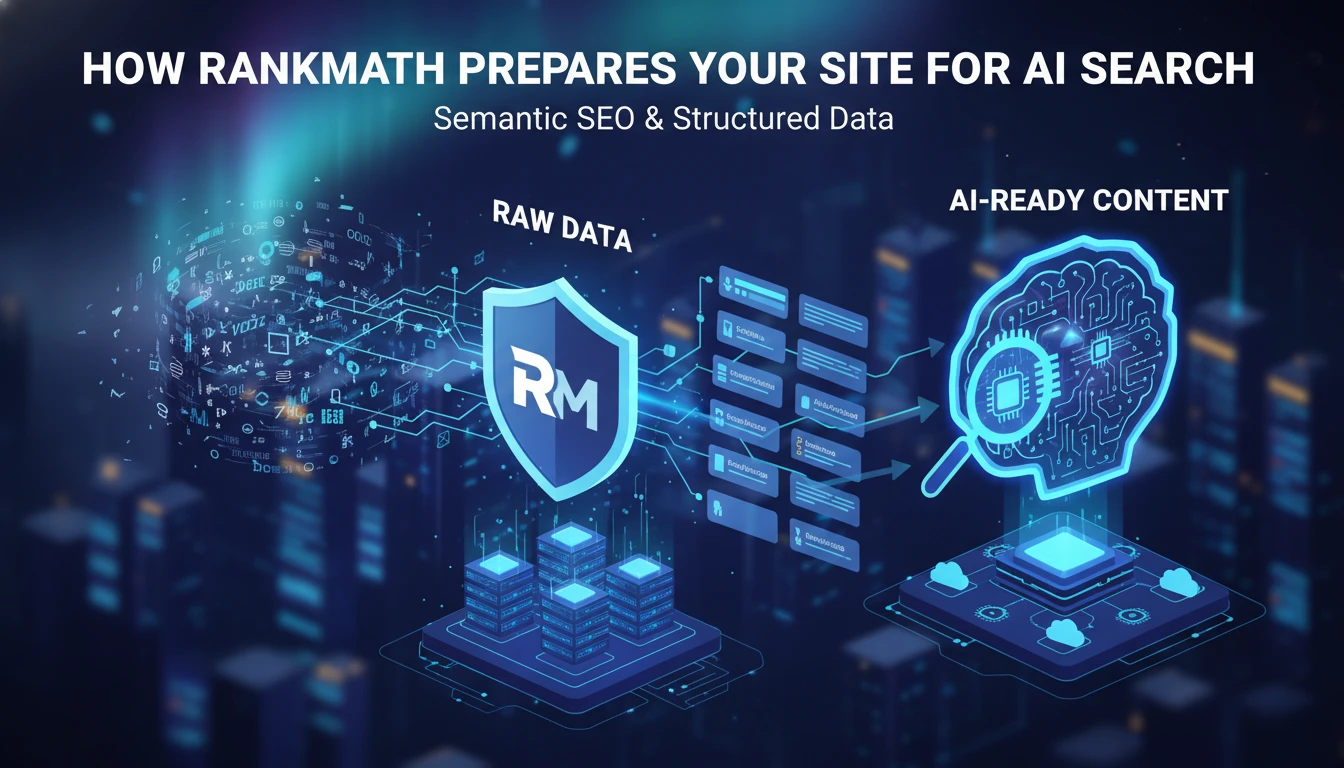 They summarize content, answer questions directly, and decide which pages are most useful.
Because of this, traditional SEO isn’t enough anymore.
You need your website to be clear, structured, and AI-friendly.
That’s where RankMath comes in.
RankMath is a WordPress SEO plugin that helps your website communicate effectively with AI search systems.
In this guide, we’ll explain everything you need to know about RankMath, AI Overview, and llms.txt, using simple language and clear examples.
By the end, even a beginner will be able to make their site fully AI-ready.
Here is an overview of the RankMath SEO Plugin:
 Name: RankMath
Owners: Bhanu Ahluwalia, Nimit Kashyap and Suraj Vibhute
Website: Rankmath.com
Price: Free, $59, $199 & $499
Category: SEO Software
Where to buy:https://rankmath.com(Click to download)
What is AI Search?
Think of AI search like a very smart librarian.
 Instead of only looking for specific words in a book, the librarian reads and understands the content, then summarizes it in simple answers.
For example, if someone searches “How I Ranked My Website in AI Overviews – Google, ChatGPT & Perplexity”, AI doesn’t just look for pages that have the words “websites” and “overviews.”
It understands the steps, tools, and tips involved and finds the page that answers the question best.
This is why AI SEO isn’t just about stuffing keywords.
Your content must:
-
Make sense logically
-
Be well-structured
-
Provide clear, complete answers
RankMath helps your website meet all these requirements.
Why RankMath is Important in the AI Era
RankMath is more than a basic SEO plugin.
 RankMath has become increasingly important in the AI era because modern search engines and large language models (LLMs) interpret websites very differently than before.
Here’s why:
-
AI Focuses on Meaning, Not Just Keywords
Traditional SEO relied on matching specific keywords.AI evaluates context, structure, and completeness.
RankMath helps your website clearly communicate its topic, making it easier for AI to understand your content and rank it correctly.
-
Structured Data for Machine Understanding
RankMath automatically adds schema markup to your pages. Schema acts as a signal to AI systems, telling them what type of content a page contains—articles, products, FAQs, reviews, etc. This improves your chances of appearing in AI-generated summaries or snippets. -
Content Insights with AI Overview
RankMath’s AI Overview analyzes your pages and suggests improvements.It identifies gaps, related keywords, and readability issues, helping your content be more complete and interpretable for AI search engines.
-
Guiding AI with llms.txt
Large language models can crawl your website to learn and summarize content. RankMath allows you to set up llms.txt, a file that tells AI which pages to prioritize and which to skip.This ensures your most important content gets attention.
-
Internal Linking for Semantic Clarity
AI evaluates how pages relate to each other.RankMath’s internal linking suggestions help structure your site so AI understands the relationships between topics, boosting authority and relevance.
-
Optimizing for AI Snippets
AI search often pulls answers directly from your pages.RankMath guides you to structure content for concise, clear answers, making it more likely your content appears in AI-powered search results.
-
Future-Proof SEO
As AI continues to dominate search, RankMath updates regularly with tools and recommendations that keep websites aligned with evolving AI SEO standards.
In short: RankMath makes your website readable and understandable for AI, not just humans.
It ensures your content is structured, complete, and optimized for the way modern search engines interpret meaning, context, and relevance.
Think of it like a teacher, guide, and translator all in one:
-
Teacher: It tells you what your content is missing.
-
Guide: It helps structure your content for readers and AI.
-
Translator: It communicates your website clearly to search engines and AI systems.
Some of its AI-focused tools include:
-
Schema Markup: Adds hidden signals to your pages to tell AI what each page is about.
-
AI Overview: Scans your content and recommends improvements.
-
llms.txt: Lets you guide AI on which pages to read and which to skip.
-
Internal Linking Suggestions: Organizes your website so AI can understand relationships between pages.
By using these tools, your site can rank better and be understood more accurately by AI.
Installing RankMath (Step-by-Step)
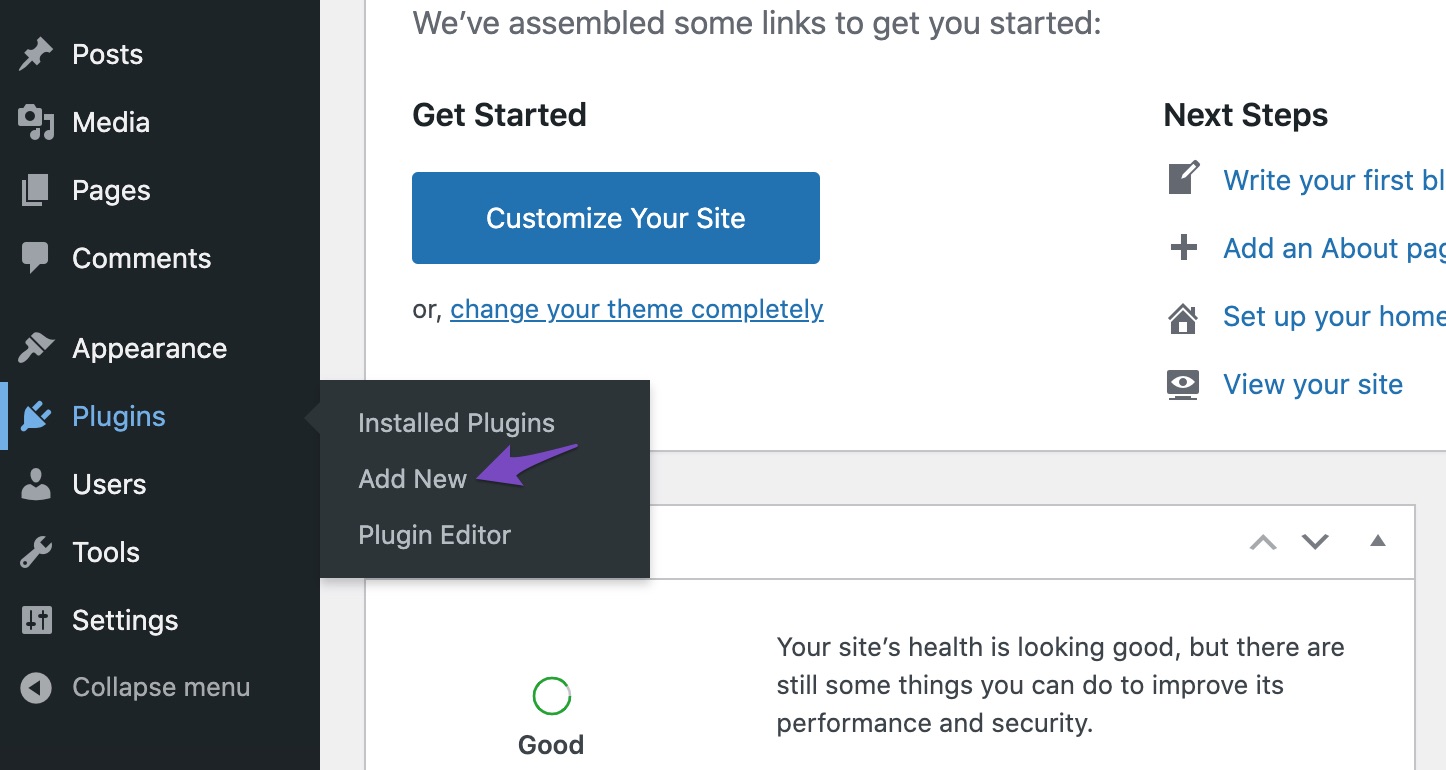 Step 1: Install RankMath
-
Log into your WordPress dashboard
This is usuallyyourwebsite.com/wp-admin. -
Go to Plugins → Add New
On the left-hand menu, click Plugins, then Add New. -
Search for RankMath
In the search box, typeRankMath. -
Install and Activate
-
Click Install Now.
-
Once installed, click Activate.
-
You now have RankMath installed and ready to use.
Step 2: Open the Setup Wizard
 Once RankMath is activated, you’ll see a welcome message with a Setup Wizard button.
-
Click Start Wizard.
-
The wizard guides you step-by-step, even if you’ve never used SEO plugins before.
Step 3: Connect Your RankMath Account
-
RankMath will ask you to connect or create a free account.
-
This is optional but recommended to access all features, updates, and AI tools.
-
Click Connect and follow the prompts.
Step 4: Import Settings from Another SEO Plugin
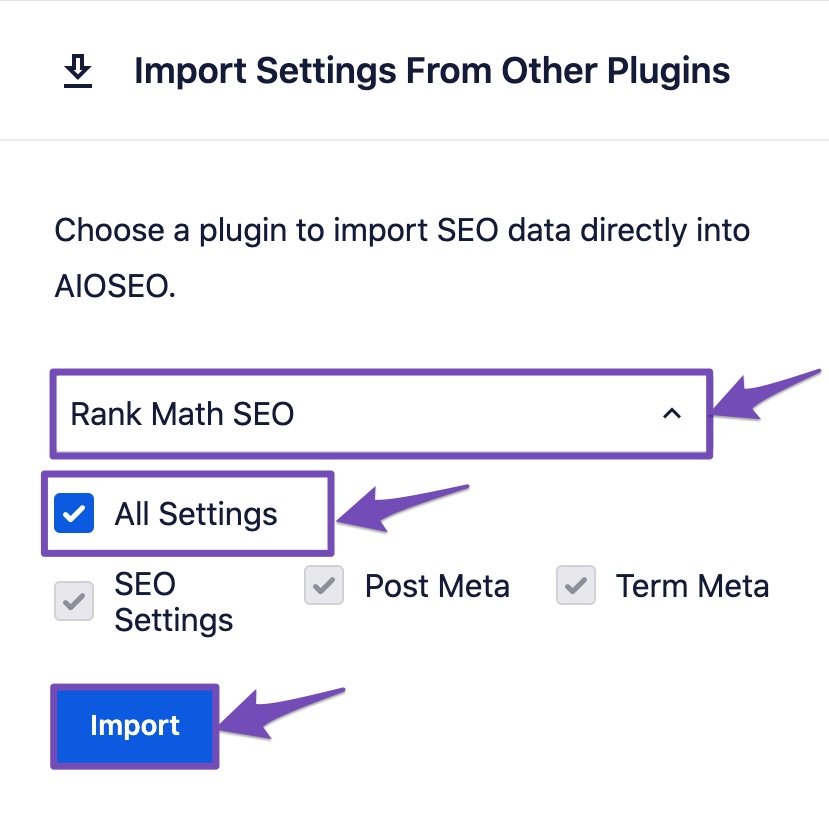
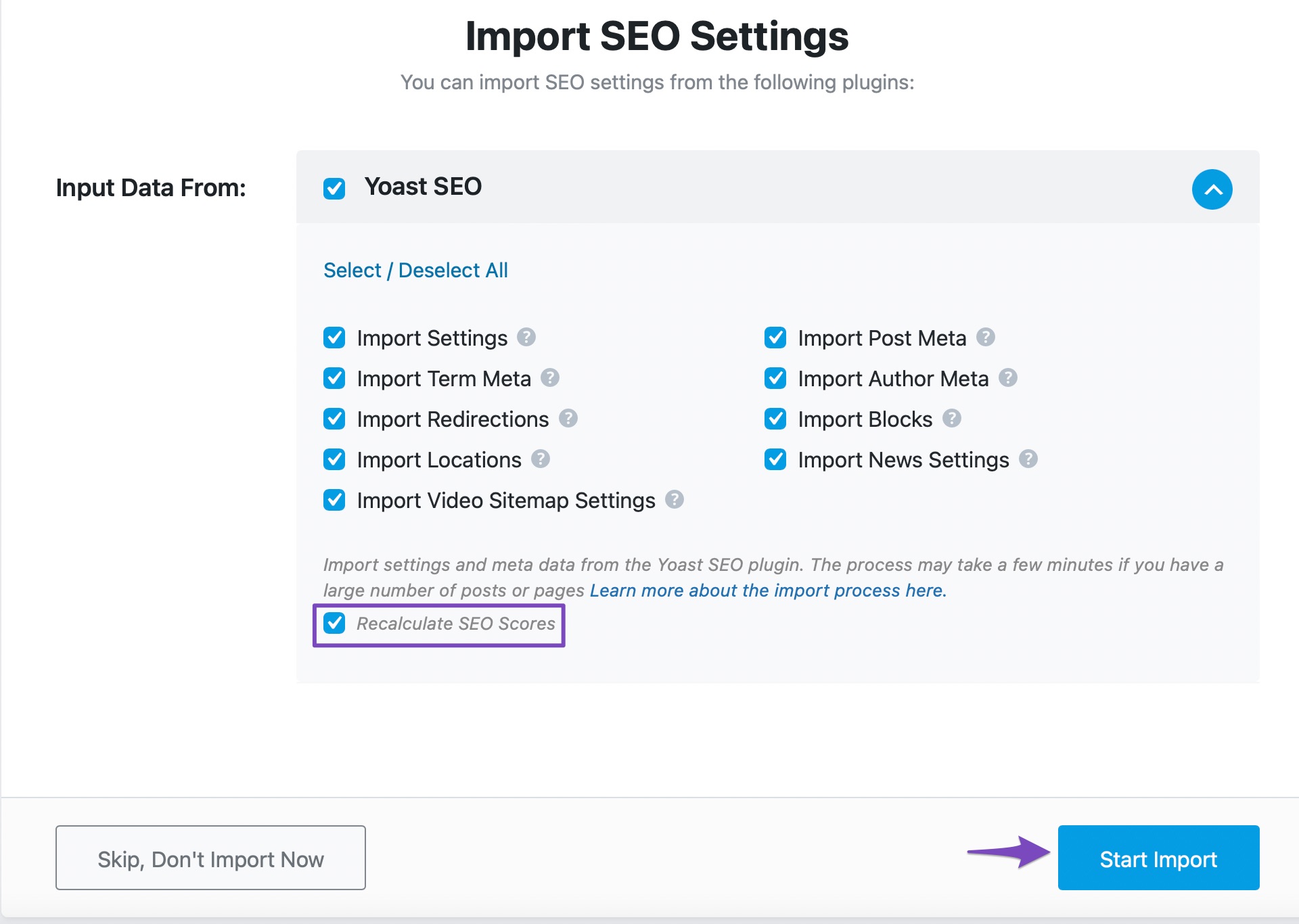 If you’re using another SEO plugin (like Yoast SEO, All in One SEO, or SEOPress), RankMath can automatically import your settings.
-
When prompted in the wizard, choose Import SEO Data from Other Plugins.
-
Select the plugin you were previously using.
-
RankMath will scan and import:
-
Titles & meta descriptions
-
Focus keywords or SEO metadata
-
Redirects and canonical URLs (if supported)
-
-
Confirm the import.
Tip: Don’t worry—your previous plugin settings won’t be lost. RankMath only reads and copies them.
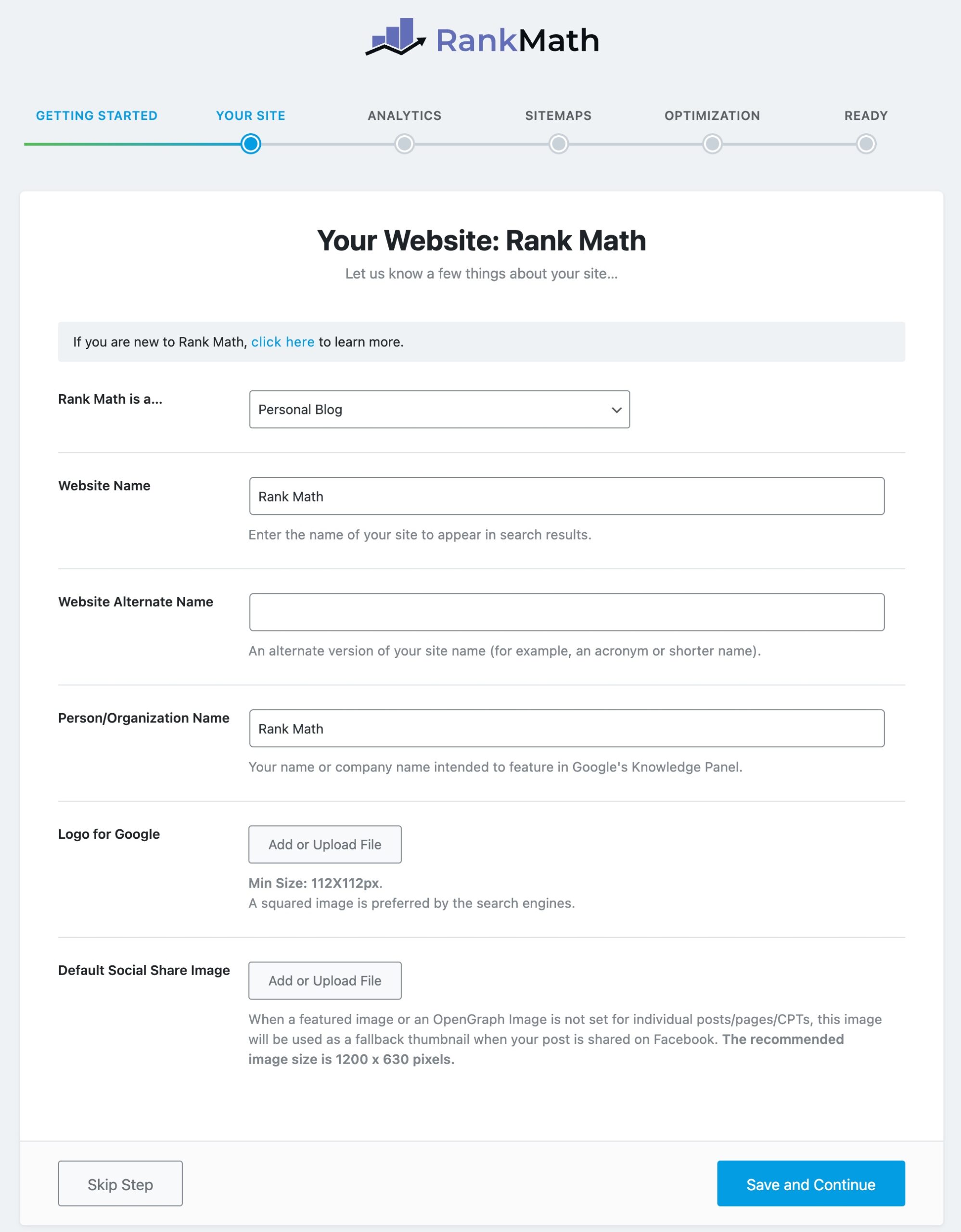
Step 5: Configure Site Settings
-
Enter your site type: blog, business, store, or portfolio.
-
Add personal or company info for structured data (helps AI and search engines).
-
Enable features like sitemaps, 404 monitor, and redirect manager.
Step 6: Configure SEO Tweaks
-
The wizard will guide you through recommended SEO tweaks:
-
Remove stop words from URLs
-
Set category and tag URL formats
-
Enable breadcrumbs
-
These tweaks improve your site structure for both humans and AI.
Step 7: Set Up Schema and Analytics
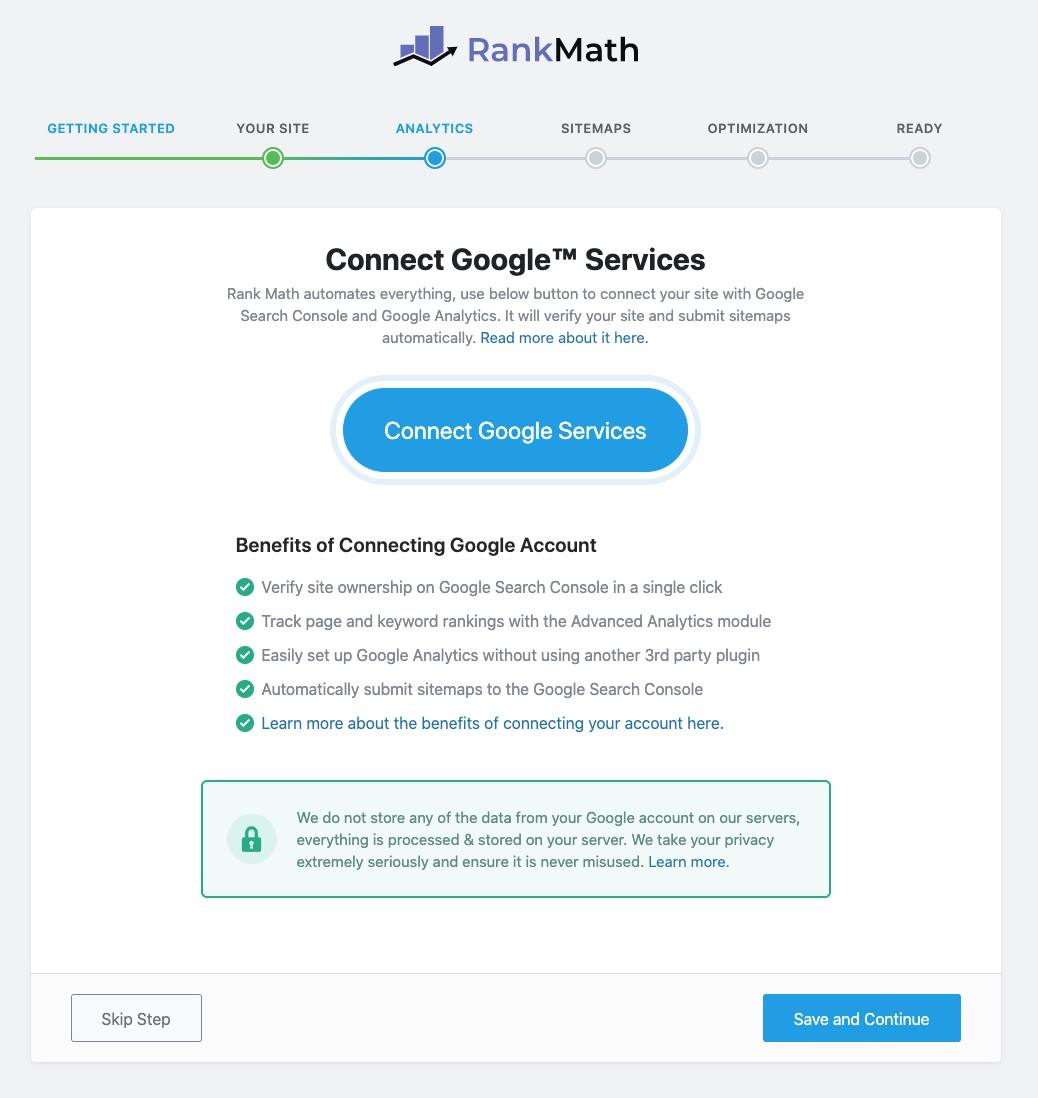
-
Choose a schema type for your content (Article, Blog, Product, etc.).
-
Connect Google Search Console or other analytics for insights.
Step 8: Finalize and Save
-
Review all settings.
-
Click Finish Setup.
Your RankMath installation is complete, and your old SEO plugin settings are safely imported.
Bonus Tip: After setup, check your AI Overview, Focus Keywords, and llms.txt modules to make your site AI-ready.
These are optional but essential for AI-driven SEO.
Here we will cover everything you need to know about how RankMath prepares you for AI.
1.Understanding RankMath AI Overview in Preparation to AI Era
The AI era has changed SEO.
 Modern search engines and large language models (LLMs) don’t just scan for keywords—they understand context, meaning, and relevance.
To compete in this environment, every page on your website needs to be clear, complete, and structured. That’s where RankMath’s AI Overview comes in.
AI Overview acts like a personal content coach, analyzing your pages and suggesting improvements that help both humans and AI understand your content better.
Why AI Overview is Important
-
Improves AI Understanding
AI can only interpret your content if it’s structured and complete. AI Overview helps you organize your ideas and highlight the key points that AI and humans both care about. -
Boosts Relevance
Pages that cover topics thoroughly rank better. AI Overview shows what topics or keywords are missing, helping your page fully satisfy user intent. -
Enhances Readability
AI prefers content that is logically structured with headings, short paragraphs, and clear sentences. AI Overview gives tips to improve readability for both humans and AI. -
Guides Keyword Use
AI Overview helps you place keywords naturally in headings, paragraphs, and meta tags without keyword stuffing.
Step-by-Step: Using AI Overview to Improve Your Page
Step 1: Review the AI Suggestions
AI Overview will display:
-
Content gaps: Missing subtopics or keywords.
-
Readability score: How easy your page is to read.
-
Keyword suggestions: Related terms and phrases you can add.
Example: If your page is about “chocolate cake,” AI Overview might suggest adding a section on “ranking tips,” “common mistakes,” or “Yoast substitutions.”
Step 2: Add Missing Information
-
Use the AI suggestions to expand your content.
-
Add headings and subheadings for each new topic.
-
Include bullet points, numbered lists, or FAQs if relevant.
Tip: Think of it as filling in the gaps in a puzzle. Each missing piece makes your page stronger.
Step 3: Optimize Readability
-
Break long paragraphs into 2–4 sentences each.
-
Use headings (H2, H3) for every subtopic.
-
Add short sentences and clear language.
AI Overview highlights areas where readability can be improved. Follow its suggestions to make your content easier to scan and understand.
Step 4: Refine Keywords
-
Add recommended keywords naturally into headings and content.
-
Avoid repeating the same keyword too often.
-
Use synonyms and related terms to cover the topic fully.
Example: Instead of using “chocolate cake” repeatedly, include phrases like “easy chocolate dessert,” “cake baking tips,” or “chocolate cake recipe.”
Step 5: Structure for AI Snippets
AI Overview also helps prepare content for featured snippets:
-
Add questions and answers (FAQ style).
-
Highlight key points in bullet lists.
-
Ensure important sentences are clear and concise.
This increases the chance your page will appear as a direct answer in AI-powered search results.
Step 6: Monitor & Repeat
-
After making improvements, save your page and run AI Overview again.
-
Check if the score improves and if new suggestions appear.
-
Repeat this process for every important page on your website.
Tip: Consistency is key. Optimizing each page ensures your entire website is AI-ready.
Tips for Using AI Overview Effectively
-
Start with your most important pages – Homepage, service pages, and top blog posts.
-
Follow suggestions gradually – Don’t try to do everything at once.
-
Use AI Overview as a guide, not a rule – Combine it with your knowledge of your audience.
-
Combine with Schema and llms.txt – Structured data and AI crawling guidance amplify the benefits of AI Overview.
Example: Strengthening a Blog Post
Let’s say you have a blog post: “How I Ranked My Website in AI Overviews – Google, ChatGPT & Perplexity.”
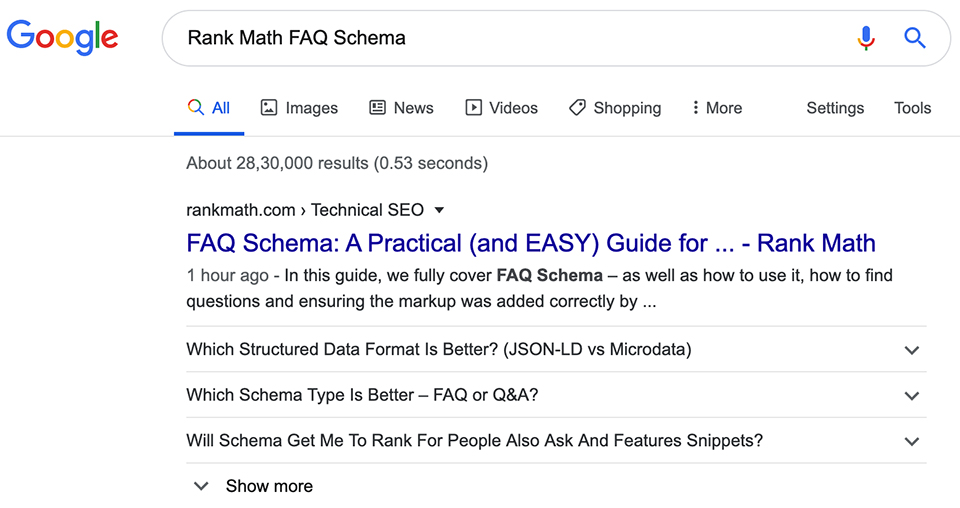 AI Overview might suggest:
-
Add a section on ingredient substitutions
-
Include a FAQ:
-
Improve readability by splitting long paragraphs
-
Add internal links to related posts: “Baking Tips” and “Cake Decoration Ideas”
-
Include additional keywords: “easy chocolate dessert,” “baking mistakes to avoid”
Following these suggestions makes your page:
-
More comprehensive
-
Easier for AI to understand
-
More likely to appear in AI-generated snippets
Benefits of Using AI Overview on Every Page
-
Complete content: AI Overview ensures nothing important is missing.
-
Better search rankings: AI understands your content fully, boosting relevance.
-
Improved user experience: Clear, structured content is easier for readers to follow.
-
Snippet potential: Structured content increases chances of appearing in AI-powered answers.
Conclusion on AI Overviews
AI Overview in RankMath is like having a personal SEO assistant for every page. It helps you:
-
Identify gaps in your content
-
Improve readability and structure
-
Optimize keywords naturally
-
Prepare for AI snippets
By using AI Overview consistently, you strengthen every page on your website, making it more valuable for readers and more understandable for AI-powered search engines
AI Overview is like a mini tutor for your content. It scans your pages and suggests ways to improve so AI can understand it better.
It looks at:
-
Keywords: Are you using the right words for your topic?
-
Content gaps: Did you forget important points AI might need?
-
Readability: Can both humans and AI easily understand your content?
Example: You write a guide on “rankmath seo” but forget to include ai.
AI Overview will flag this and suggest adding it, making your content more complete.
2. RankMath: A Practical Guide to llms.txt and the New Age of Search
In the AI era, search engines are no longer just matching keywords—they read, understand, and interpret content like a human.
Large language models (LLMs) now crawl the web to learn context, relevance, and structure.
This shift makes llms.txt, a relatively new tool in RankMath, essential for guiding AI to the right pages on your website.

This guide explains llms.txt in simple terms, shows how to use it with RankMath, and links it to making your site fully AI-ready.
What is llms.txt?
Think of llms.txt like a map for AI:
-
It tells AI which pages to prioritize
-
It marks pages to ignore
-
It guides AI through your site efficiently
Unlike robots.txt, which controls traditional search engine crawling, llms.txt is designed specifically for AI and LLMs, helping models understand what content is important for answering queries.
Why llms.txt Matters in AI Search
In traditional SEO, search engines scan everything they can find.
AI search engines, however, learn from the content they read. Without guidance, AI might:
-
Focus on low-value pages
-
Miss important content
-
Misinterpret your website structure
Using llms.txt ensures AI:
-
Prioritizes your most valuable pages
-
Skips irrelevant pages (like login or admin pages)
-
Understands your site’s hierarchy
This directly supports RankMath’s goal of preparing your site for AI search, making your pages readable, structured, and discoverable by LLMs.
Setting Up llms.txt in RankMath
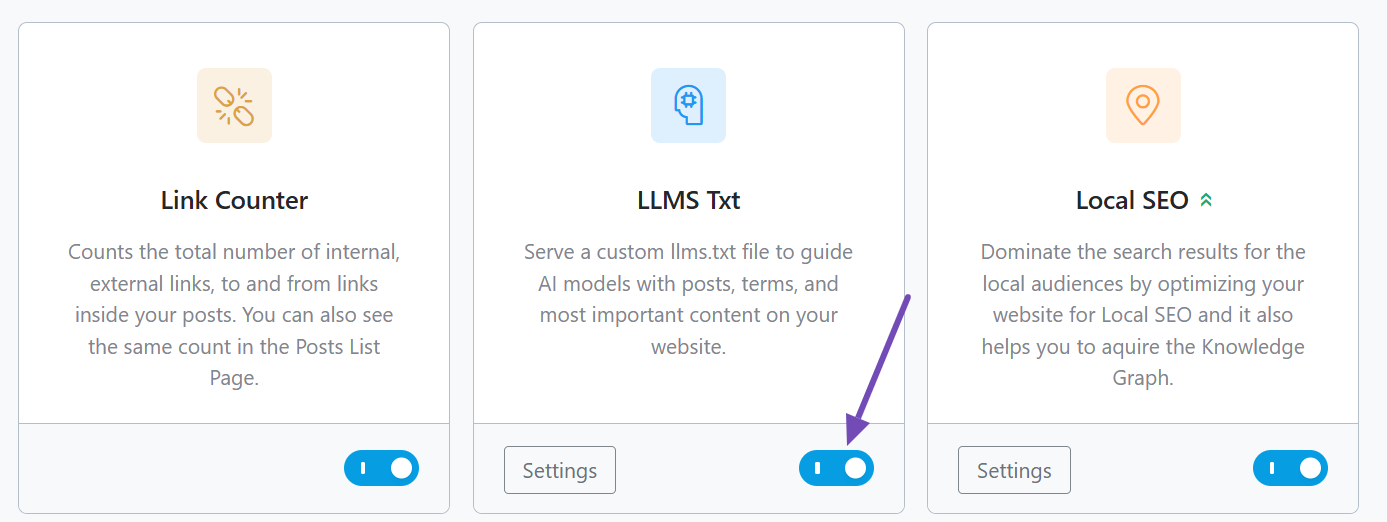
Step 1: Enable the Module
-
Go to RankMath → Dashboard → Modules
-
Locate llms.txt and toggle it ON
This activates the feature on your site.
Step 2: Create Rules for AI Crawling
-
Go to RankMath → llms.txt
-
Add allowed pages (AI should read these)
-
Add restricted pages (AI should skip these)
Example:
-
Allow: Homepage, Blog, Services, Products
-
Disallow: Admin pages, Checkout pages, Private posts
This tells AI to focus on your most important content, improving its understanding of your website.
Step 3: Save and Test
-
After adding your rules, click Save Changes
-
Test by accessing your llms.txt file at
yourwebsite.com/llms.txt -
Ensure all critical pages are included and private pages are excluded
Practical Example: E-Commerce Website
Suppose you run an online store selling skincare products:
-
Allow Pages: Product pages, Blog posts on skincare tips, FAQ page
-
Disallow Pages: Admin dashboard, Customer account pages, Checkout page
AI now learns which pages are relevant for search queries like “best organic skincare cream” and ignores irrelevant pages, improving the site’s representation in AI-driven search.
How llms.txt Complements Other RankMath Features
llms.txt doesn’t work alone. It is part of a larger AI-ready strategy in RankMath:
| RankMath Feature | Role in AI Search |
|---|---|
| AI Overview | Scans pages and suggests content improvements |
| Focus Keywords | Guides AI to understand the main topic of each page |
| Internal Linking | Shows AI relationships between pages |
| Schema Markup | Labels content type for AI understanding |
| llms.txt | Tells AI which pages to read and which to skip |
Together, these tools make your site AI-friendly, ensuring your content is structured, complete, and easy for LLMs to interpret.
Tips for Using llms.txt Effectively
-
Start with High-Value Pages – Prioritize your homepage, product/service pages, and top blog posts
-
Exclude Irrelevant Pages – AI should skip admin, checkout, or duplicate content pages
-
Combine with Schema – Adding schema to allowed pages increases AI understanding
-
Regularly Update – As you add new pages, update llms.txt to maintain guidance
The Future of Search and RankMath
AI search is evolving rapidly.
LLMs read websites, summarize content, and provide answers directly to users. By using RankMath with llms.txt:
-
You control which pages AI sees
-
Your most important content ranks better in AI-driven search results
-
You improve the chances of appearing in AI snippets
RankMath is more than SEO; it is a bridge to the AI-powered web, making your website understandable to both humans and intelligent machines.
Conclusion on RankMath llms
In the new age of search, llms.txt is a must-have tool for guiding AI models.
When used with RankMath’s AI Overview, Focus Keywords, Internal Linking, and Schema, it ensures your website is:
-
Readable and structured
-
Prioritized for AI crawling
-
Optimized for search visibility
RankMath helps you prepare for AI search not just today, but for the evolving landscape of tomorrow.
3. Organizing Internal Links with RankMath
Internal links work as the site’s map.
When the structure is clear, AI can follow how ideas connect, how broad topics break into smaller parts, and which pages carry the most weight.
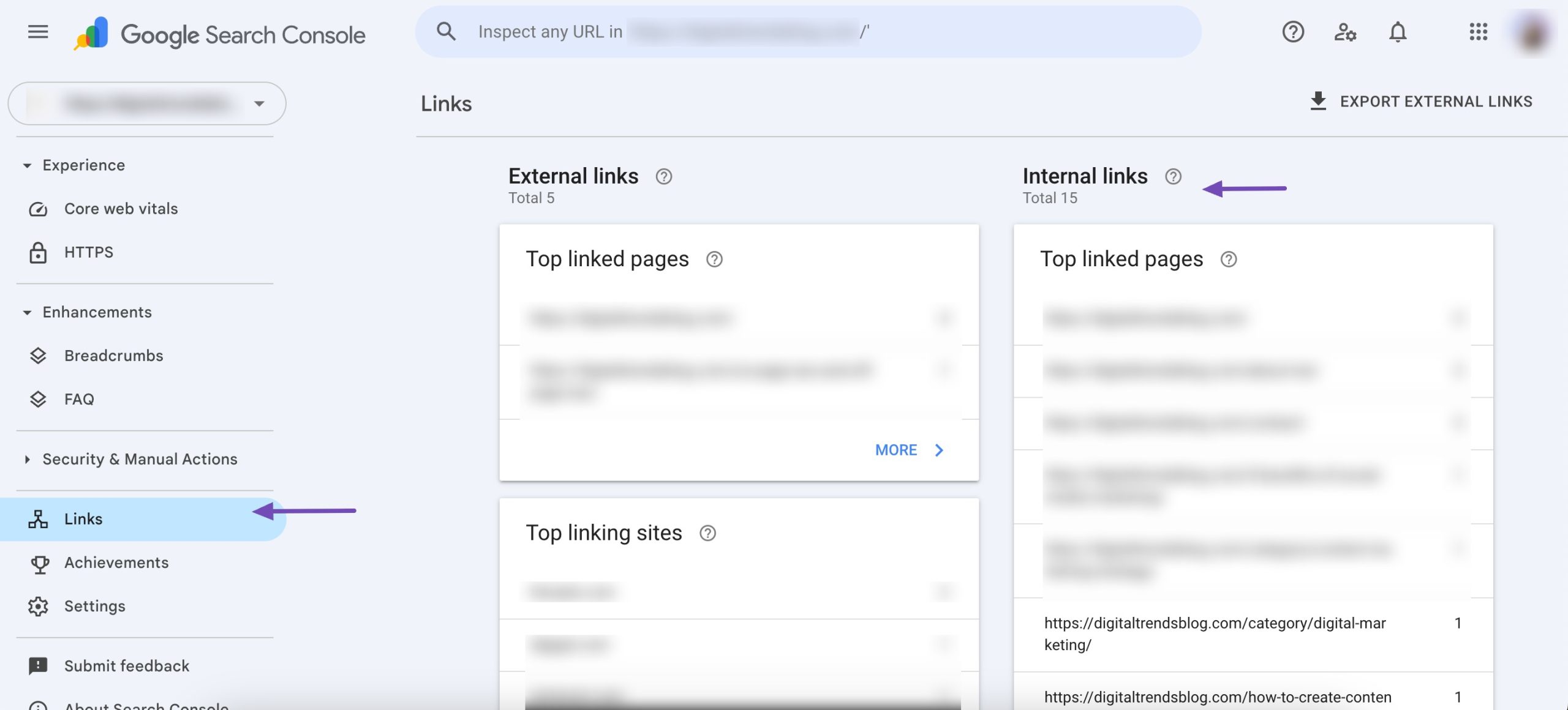 RankMath’s system makes this process deliberate rather than accidental.
1. Establishing Topic Clusters
AI search engines prefer sites that group related subjects together.
RankMath scans your published posts and recommends links that strengthen these clusters.
When similar pages point to each other, AI can identify your site as a focused source on the subject.
Example:
If you write about AI product research, RankMath may suggest linking to pages that cover:
-
AI keyword tools
-
Content AI workflows
-
Semantic optimization methods
These links help AI understand that all these pages belong to the same knowledge area.
2. Improving Context Signals
Internal links give AI clear clues about what a page means.
When RankMath highlights anchor text or suggests pages that match your topic, it becomes easier for search engines to connect your content with user intent.
Example:
When targeting a keyword such as RankMath Content AI, the tool may suggest linking to pages that discuss SEO setup, on-page optimization, or content scoring.
This reinforces relevance without forcing the keyword.
3. Reinforcing Authority Within Your Niche
Strong internal linking raises the strength of cornerstone pages.
RankMath marks these pages and directs more links to them. AI systems recognize this pattern and treat those pages as primary references.
If your main page targets AI search optimization, consistent internal links from related articles tell AI that this is the page with the deepest coverage.
4. Ensuring Even Distribution of Link Equity
AI search does not rely on single pages.
It learns from patterns across the entire site. RankMath helps spread internal links across older posts, new articles, and supporting material.
This balance helps AI view the site as complete rather than fragmented.
AI models perform better when content flows in a logical order.
RankMath’s link suggestions often follow a natural progression, such as:
-
Introductory explanations
-
Practical steps
-
Examples
-
Related advanced topics
A structure like this helps AI generate accurate summaries, answer questions from your pages, and surface your content in AI-powered search panels.
Why This Matters for AI-Ready Content
Building AI-ready content requires more than strong writing.
It requires a structure that AI can read with ease. RankMath’s internal link suggestions connect the pieces so the entire site supports the main subject with consistent signals.
Pages stop standing alone and instead form a network that AI can interpret with clarity.
Internal links are like roads connecting different parts of a city. AI follows these roads to understand your website structure.
RankMath can help you:
-
Suggest related pages to link internally
-
Identify pages not linked anywhere (orphan pages)
-
Show which pages are most important for AI to see
Why it matters: If AI can’t find connections between your pages, it may not understand your content fully. Proper internal linking improves AI comprehension and boosts SEO.
4. Choosing Focus Keywords with RankMath
Focus keywords are the main words or phrases your page targets.
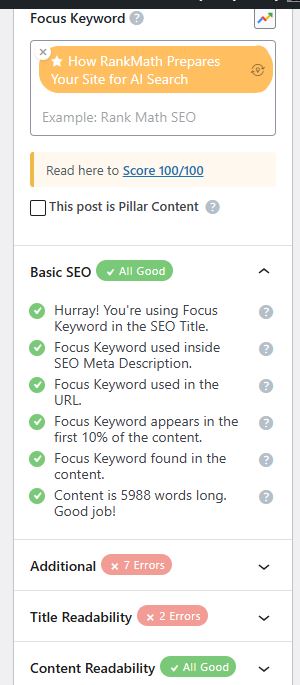 RankMath helps you:
-
Pick the best keyword for your topic
-
Use it naturally in headings, meta descriptions, and content
-
Avoid overusing it, which can confuse AI
Tip: AI looks for comprehensive answers, not just repetition of words.
RankMath ensures your keywords appear naturally while your content stays clear.
Example: Instead of repeating “baking cake” 20 times, RankMath will suggest using related terms like “chocolate dessert,” “cake instructions,” and “oven temperature” to cover the topic fully.
5. How RankMath Uses Schema to Train AI to Understand Your Pages
RankMath assigns a schema type to every page or post. Each schema type explains the “purpose” of your content to AI.
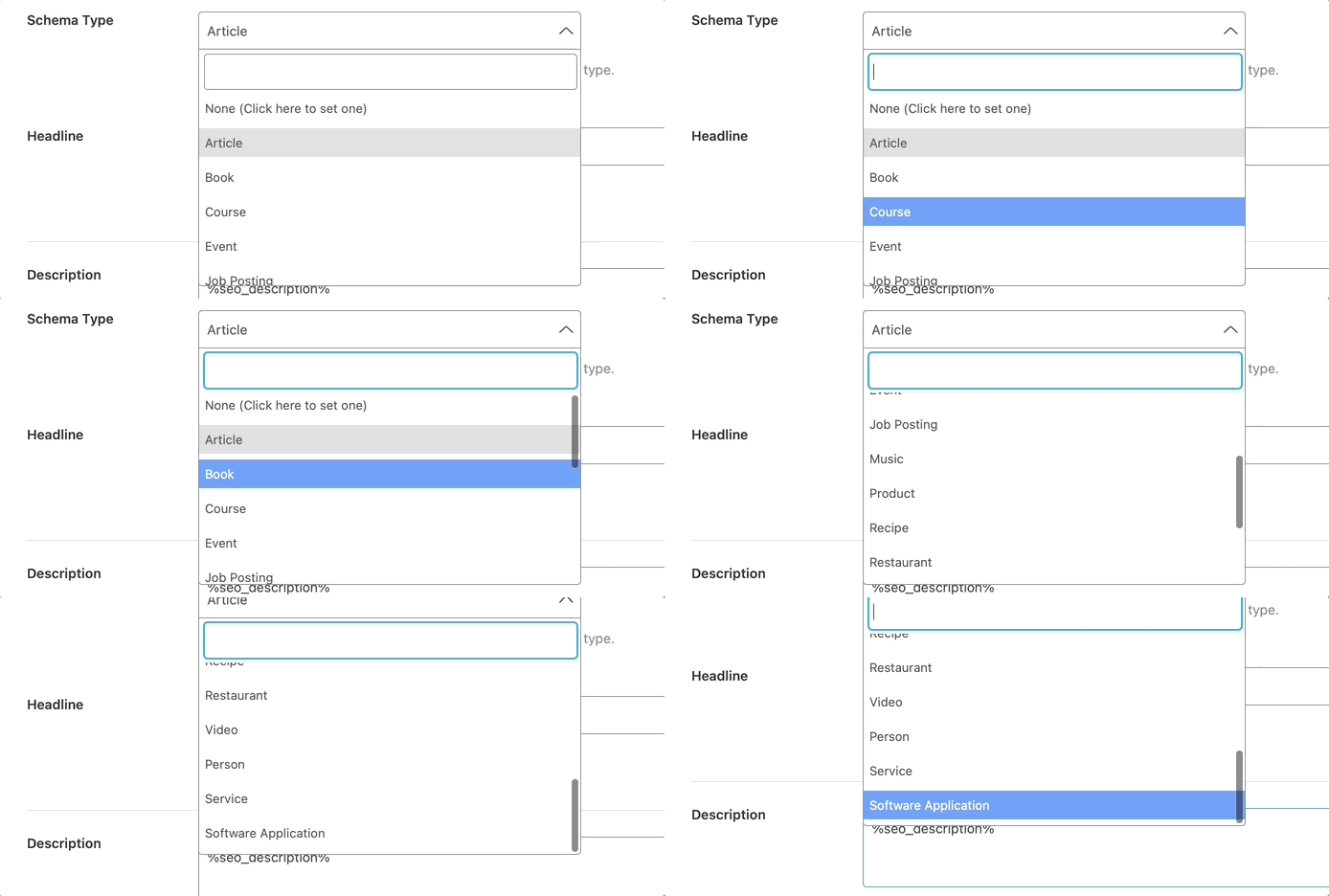 Some common schema types in RankMath include:
-
Article
-
BlogPosting
-
FAQPage
-
HowTo
-
Product
-
Local Business
-
Recipe
-
Service
-
Course
Each type has its own fields that feed structured information directly to search engines and LLMs.
Example
If your page is a product page, RankMath adds data like:
-
product name
-
price
-
availability
-
rating
-
description
AI systems instantly understand what the page is, what it sells, and whether it is complete.
This improves your chances of appearing in:
-
AI Overviews
-
Product recommendations
-
Shopping panels
-
AI summaries
-
Knowledge panels
Without schema, AI would scan your words blindly and may misclassify the page.
6. How RankMath Schema Helps AI Build More Accurate AI Summaries
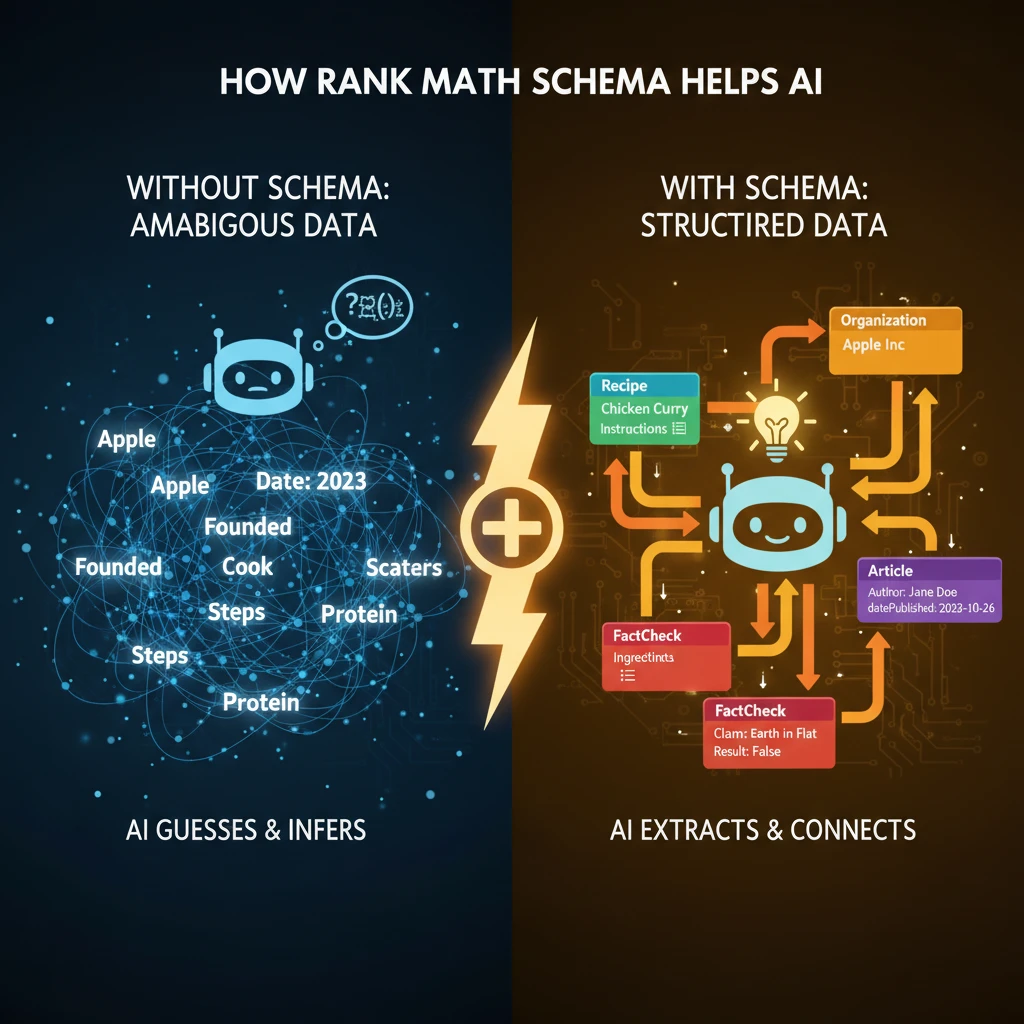 AI Overviews and AI-driven search panels rely on verified, structured facts.
They prefer websites that present:
-
clear entities
-
validated information
-
consistent structure
-
precise labeling
RankMath schema supplies this structure.
Example
For a FAQ page, RankMath adds FAQPage schema with:
-
each question
-
each answer
-
the relationship between them
AI can then use your answers inside search snippets or AI summaries.
This increases exposure and allows users to see your content without even clicking.
7. How RankMath Schema Eliminates Ambiguity for AI Models
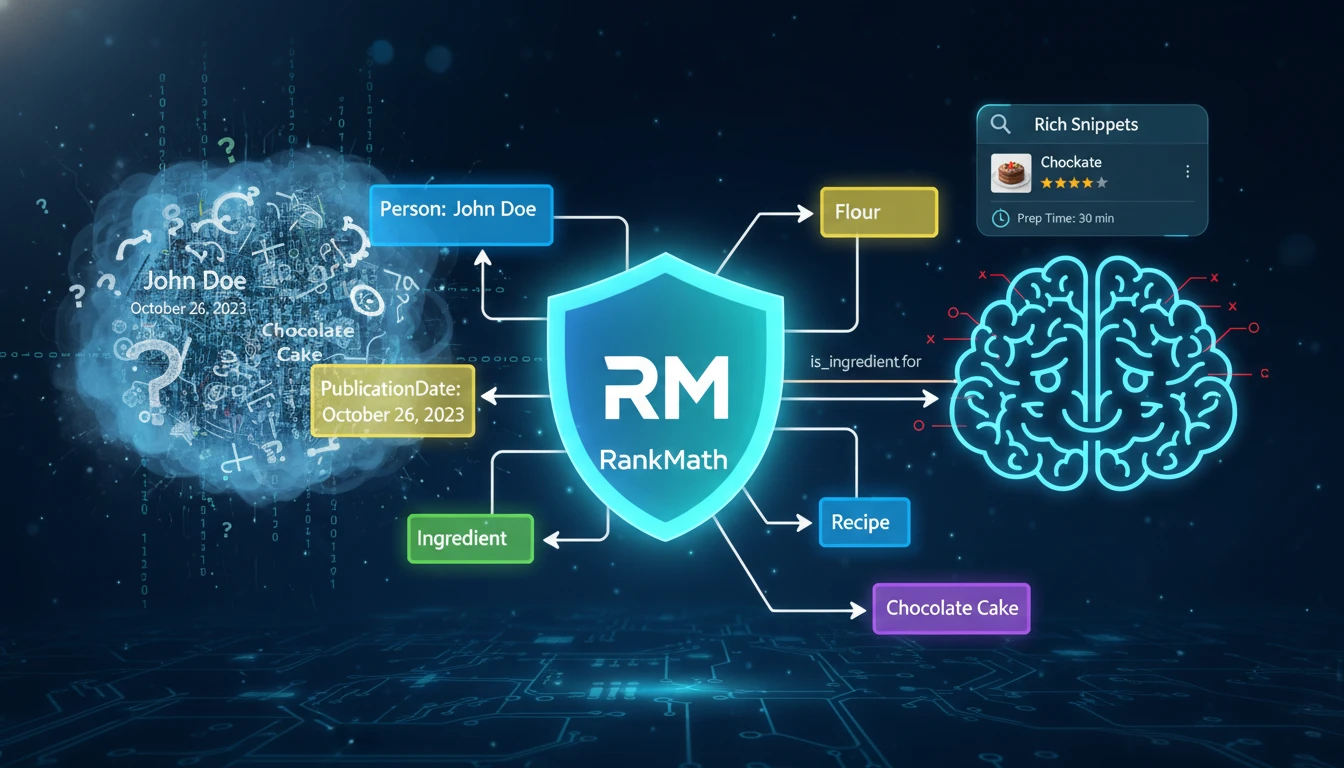 AI models struggle when pages contain mixed or unclear information.
Example:
A blog post that also includes a recipe.
Without schema, AI may ask:
-
Is this a blog?
-
Is this a recipe?
-
Is this a personal story?
-
Is this a how-to guide?
RankMath removes this confusion by assigning a single schema (or multiple where allowed), making your page simple for AI systems to classify.
This strengthens:
-
topic relevance
-
ranking stability
-
contextual accuracy
-
semantic understanding
8. RankMath Schema in Relation to Entity SEO
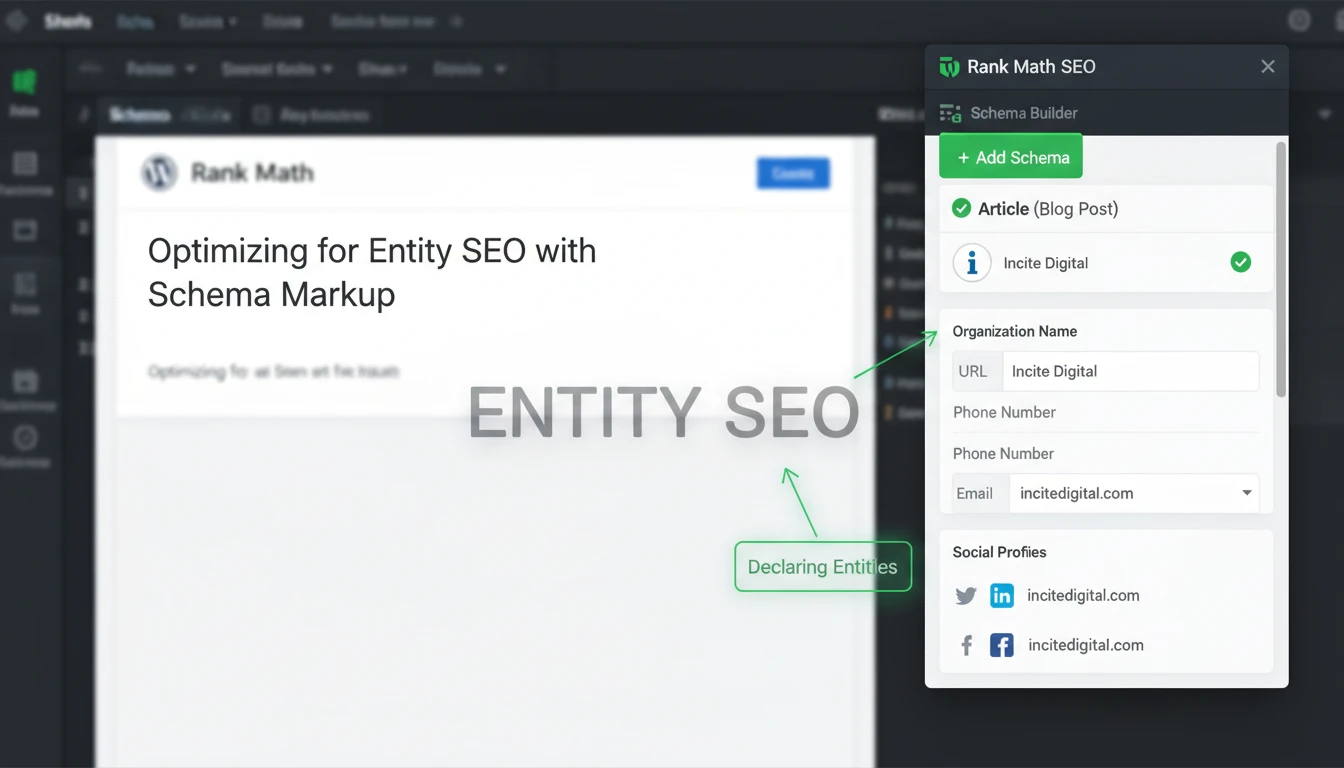 AI search is moving toward entity-based understanding.
Entities are “things” like:
-
A person
-
A location
-
A product
-
A tool
-
A company
RankMath schema helps define entities clearly.
Schema fields like:
-
name
-
description
-
brand
-
author
-
headline
-
address
-
image
-
datePublished
act as “identity markers” for your content.
When AI sees these fields cleanly formatted, it connects your pages to the right knowledge graphs and topic clusters.
This boosts:
-
authority
-
relevance
-
ranking consistency
-
inclusion in AI-driven summaries
9. How Schema Works Together With RankMath’s Other AI Tools
 Schema works best when combined with:
A. Content AI
This tool helps you write content that covers a topic deeply enough for AI search.
Schema then labels that content so machines can understand it.
B. AI Overview
This checks whether your content is complete.
Schema then expresses that completeness in structured form.
C. llms.txt
This file tells AI which schema-based pages to read or skip.
Together, these tools create:
-
structured content
-
complete content
-
crawl-friendly content
-
safe-for-AI content
-
easy-to-interpret content
This is the foundation of AI-ready SEO.
Practical Examples of RankMath Schema in AI Search
Example 1: Product Page
Schema fields RankMath provides:
-
Product name
-
Brand
-
Price
-
Rating
-
Availability
AI reads this and places the product in relevant AI shopping queries.
Example 2: FAQ Article
RankMath FAQ schema feeds your Q&A directly into AI Overviews.
Your answers can appear word-for-word in AI summaries.
Example 3: Local Business
RankMath adds:
-
business name
-
physical address
-
phone number
-
opening hours
-
location coordinates
AI search uses this to recommend local services.
Final Summary
RankMath prepares your site for AI search through schema markup by:
-
labeling the purpose of each page
-
feeding AI systems structured information
-
eliminating ambiguity
-
strengthening contextual understanding
-
increasing eligibility for AI Overviews
-
improving rich snippets and entity recognition
-
helping LLMs quote and summarize your content accurately
Schema is the foundation of machine understanding.
RankMath automates all of it, ensuring your website remains clear, complete, and AI-ready in a search environment where structure matters more than ever.
10. Optimizing for AI Snippets With RankMath
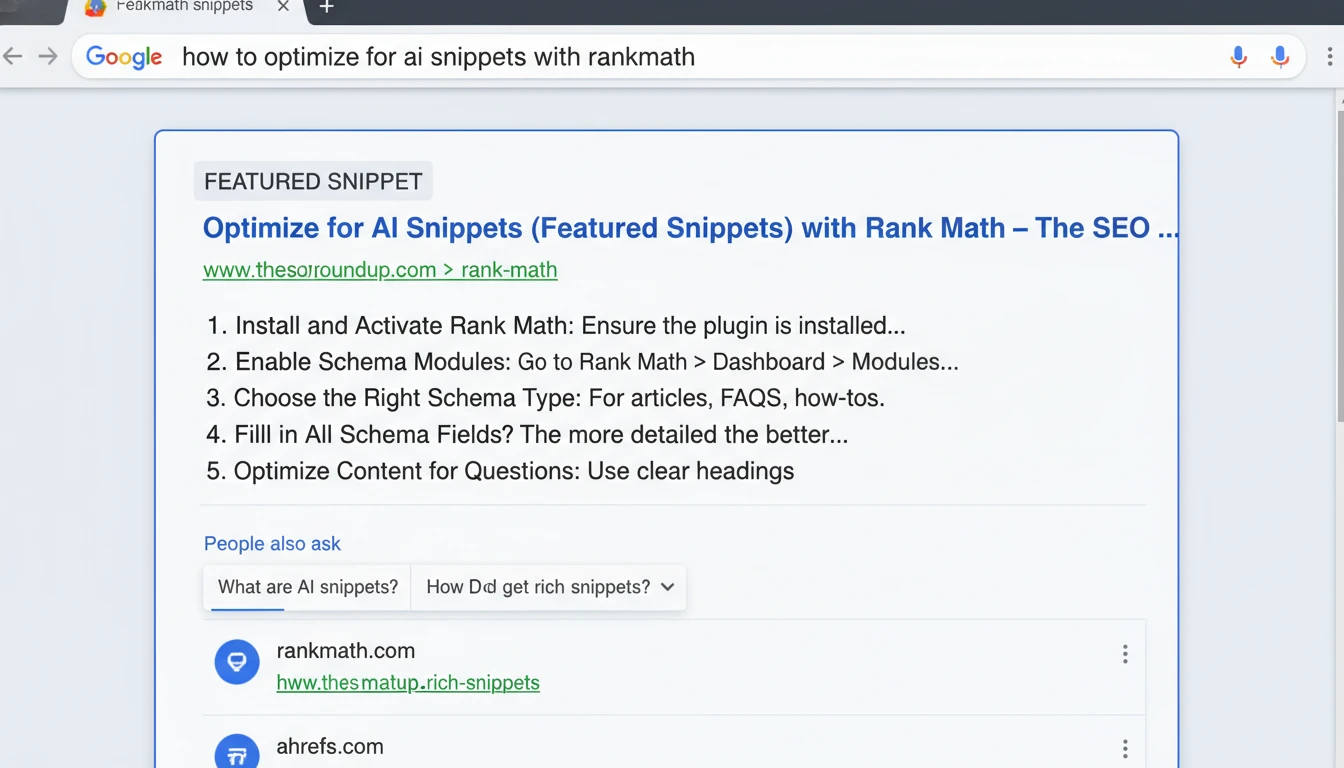 AI-driven search relies on short, reliable, structured summaries known as AI Snippets or AI Overviews.
These summaries pull information directly from websites, then rewrite or reorganize it for the user.
To appear inside these summaries, a page must be:
-
clear
-
factual
-
well-structured
-
easy for AI to classify
-
complete in its coverage of a topic
RankMath equips your website with exactly these qualities.
What AI Snippets and AI Overviews Look For
AI systems scan a page and look for:
-
strong topical signals
-
complete answers that match search intent
-
logical structure supported by headings
-
clear relationships between ideas
-
defined entities (people, products, places, steps, tools)
-
low ambiguity
-
structured data the model can trust
RankMath makes each of these signals stronger.
How RankMath Improves Your Eligibility for AI Snippets
A. RankMath Clarifies Page Purpose
RankMath assigns:
-
focus keywords
-
secondary keywords
-
content themes
-
schema types
This helps AI interpret the page correctly.
When a page has a clean identity, AI systems trust it more.
Example:
If the page is a “How-To Guide,” RankMath labels it as a HowTo page and highlights steps.
AI Overviews use this format directly.
B. RankMath Ensures Content Covers Every Angle
Using tools like:
-
AI Overview content analysis
-
Content AI topic suggestions
The plugin shows which topics or subtopics are missing.
AI prefers complete answers.
When RankMath fills gaps, your page becomes more likely to appear in search summaries.
Example:
Topic: “How to Start a YouTube Channel”
RankMath may suggest adding:
-
equipment basics
-
channel branding
-
keyword research steps
-
upload settings
This completeness makes your page summary-friendly.
C. RankMath Makes Structure Easy for AI Systems to Read
AI search engines look for:
-
heading hierarchy
-
short, clear paragraphs
-
ordered steps
-
bullet points with defined meaning
RankMath analyzes readability and flags areas that need improvement.
The clearer the structure, the easier it is for AI to quote your content.
D. Schema Markup Reinforces Snippet Eligibility
Schema markup gives AI machines “verified facts.”
RankMath automatically adds schema for:
-
articles
-
FAQs
-
how-to guides
-
products
-
reviews
-
recipes
-
services
Schema is the foundation of most AI-generated search summaries.
Pages with more structured data appear more often in AI results.
E. RankMath Teaches AI How to Extract and Summarize Your Content
AI systems don’t read content the way humans do.
They extract patterns from:
-
schema fields
-
headings
-
defined steps
-
consistent formatting
-
entity labels
RankMath strengthens each of these signals.
Example: FAQ Section
When you create a FAQ block, RankMath adds FAQ schema.
AI can use the question and answer directly inside an AI Overview.
Example: How-To Guide
RankMath provides step numbers and durations in structured form.
AI uses these steps as its own instructions in the snippet.
4. RankMath Prevents Misinterpretation in AI Summaries
AI may misread a page if:
-
information is mixed
-
the topic is unclear
-
the page contains unrelated content
-
the format is inconsistent
RankMath reduces this risk by:
-
highlighting unclear content
-
improving internal links
-
keeping focus on a single topic
-
ensuring schema matches the page purpose
-
helping you refine readability
This improves accuracy in AI-generated summaries.
5. RankMath Strengthens Topical Authority, Which AI Snippets Depend On
AI Overviews prefer authoritative sources.
Authority in AI search is measured by:
-
internal linking
-
consistent topic clusters
-
entity accuracy
-
depth of coverage
RankMath builds this foundation through:
-
internal linking suggestions
-
content pillar analysis
-
category-level optimization
-
entity-based schema
The stronger your topical identity, the more likely AI uses your content.
6. RankMath Helps You Appear in AI Snippets Without Keyword Stuffing
AI systems do not reward keyword repetition.
They reward clarity.
RankMath’s Content AI recommends:
-
related terms
-
semantically connected phrases
-
supporting subtopics
This creates content that feels natural to humans but appears comprehensive to machines.
Example Keyword Group:
Primary: “AI SEO for WordPress”
Secondary:
-
“AI search ranking factors”
-
“RankMath AI optimization tools”
-
“llms.txt for AI crawling”
This combination helps AI summarize the page correctly.
7. RankMath Improves Snippet Accuracy Through llms.txt
AI Overviews prefer pages that respect model guidelines.
The llms.txt file provided by RankMath:
-
tells AI which pages to read
-
hides low-value pages
-
protects sensitive or duplicate sections
-
controls crawling priority
This reduces noise and makes important pages more likely to be selected for summaries.
8. Bringing It All Together
RankMath prepares your site for AI Snippets and AI Overviews by:
-
giving each page a clear structure
-
helping you cover topics completely
-
strengthening entity clarity
-
adding schema for machine understanding
-
guiding AI toward the correct pages
-
improving readability and hierarchy
-
reinforcing semantic connections
-
reducing ambiguity in meaning
AI search looks for trustworthy, well-structured, complete information.
RankMath provides the framework that allows your website to meet these standards and earn placement in the new generation of AI-powered search summaries.
12. Writing for Both Humans and AI
AI search has changed how content is evaluated.
Search engines now study your writing the same way readers do.
They look for clarity, structure, completeness, and intent.
RankMath guides you toward writing that meets both expectations without turning your work into machine-sounding text.
1. Encouraging Natural Language
RankMath highlights focus keywords without forcing repetition.
This keeps sentences smooth for human readers while giving AI enough context to understand the topic.
Instead of keyword stuffing, the tool promotes natural language that still carries strong signals for machine interpretation.
2. Supporting Clear Sectioning
AI prefers content with defined sections and predictable flow.
RankMath’s readability checks help you break topics into steady paragraphs, headings, and subtopics.
Humans appreciate this because the reading experience feels organised.
AI appreciates it because the hierarchy is easy to interpret.
3. Improving Topical Coverage
Content written for AI requires depth and completeness.
RankMath suggests related terms and subtopics through its Content AI tool.
These suggestions help you answer the full scope of a subject, which strengthens relevance for AI models and builds trust with readers looking for reliable information.
4. Reducing Unnecessary Complexity
Readers disengage when writing feels cluttered.
AI models struggle when a page contains mixed signals or vague language.
RankMath’s readability guidance helps you trim unclear sentences, remove distractions, and keep the message steady.
This improves usability for both audiences.
5. Reinforcing Meaning Through Schema
Schema is the bridge between human-friendly prose and machine-readable structure.
RankMath assigns the right schema so AI can interpret your article without altering the tone or style meant for human readers.
The writing stays natural, while the structure beneath it remains organised.
6. Aligning Content With User Intent
AI search systems study intent behind queries.
RankMath’s keyword and topic suggestions guide you toward answering the kinds of questions AI expects.
Readers get thorough explanations. AI gets clearly mapped intent and supporting context.
7. Maintaining Consistency Across the Site
Humans notice consistency in tone and layout.
AI notices consistency in metadata, headings, schema, and internal links.
RankMath keeps these elements aligned across your pages. This unified structure helps AI navigate the site while giving readers a dependable experience.
Summary
RankMath helps you write content that serves both humans and AI by guiding you toward natural language, clear structure, complete topic coverage, and consistent organisation.
It preserves your human voice while adding the signals AI models need to classify, summarise, and trust your content.
This balance is essential in an environment where search engines judge writing the same way readers do.
Monitoring AI SEO Performance
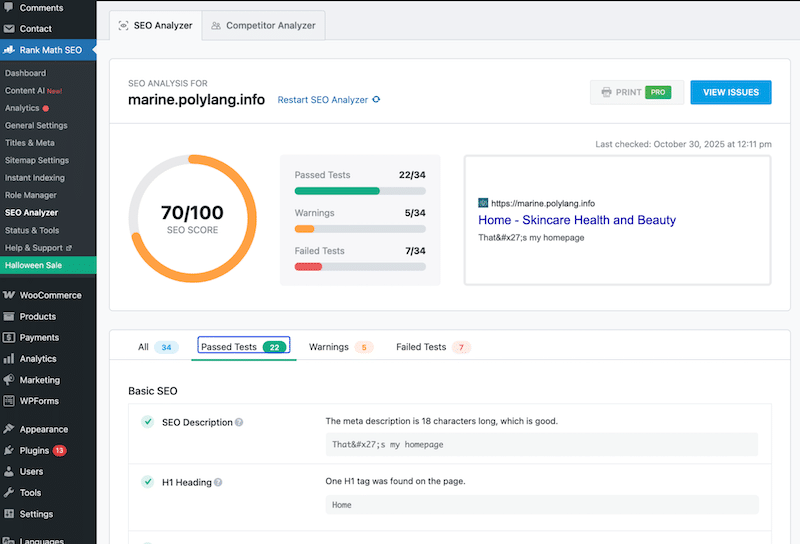 AI search engines rely on signals that indicate not only content quality but also how well that content performs and satisfies user intent.
RankMath’s SEO performance monitoring ensures your site continuously meets these standards, helping AI understand and trust your content.
1. Tracking Keyword Rankings and AI Relevance
RankMath monitors how your target keywords perform over time.
This data tells you which topics AI systems are likely to consider authoritative.
Pages that consistently rank for relevant keywords signal to AI models that your content is accurate, comprehensive, and trustworthy.
Example:
If your page is optimized for AI search optimization, RankMath shows how it ranks for related phrases like RankMath AI content tools or AI-ready SEO strategy. AI search engines can infer topical authority from consistent coverage.
2. Monitoring Content Readability and Engagement
RankMath tracks readability scores, paragraph structure, and overall content clarity.
AI models favor content that is easy to scan and understand.
By monitoring and improving readability, RankMath ensures your pages remain accessible to human readers and interpretable by AI systems alike.
3. Analyzing On-Page SEO Elements
RankMath evaluates titles, meta descriptions, headings, alt texts, and schema usage.
These on-page elements are key for AI-driven search snippets and overviews.
Pages that maintain optimal on-page SEO perform better in AI summaries because the metadata provides structured context that AI can rely on.
Example:
-
Correctly formatted FAQ schema
-
Descriptive, keyword-aligned headings
-
Meta descriptions that summarize content succinctly
These elements make it easier for AI to extract answers or generate short summaries.
4. Identifying Opportunities With Content AI Suggestions
RankMath’s Content AI integrates performance monitoring with actionable suggestions.
If a page underperforms, it recommends additional keywords, related subtopics, or content expansions.
This ensures your pages remain complete, comprehensive, and AI-friendly.
5. Tracking Site Health and Crawlability
AI search systems interpret signals about site reliability and crawlability.
RankMath monitors broken links, redirects, and other technical issues.
Pages that are fully crawlable and structured without errors are more likely to be selected for AI snippets and overviews.
6. Measuring Topic Authority Across Pages
RankMath helps you track which pages contribute most to a topic cluster.
By monitoring internal linking, keyword coverage, and engagement metrics, you can strengthen cornerstone pages.
AI interprets this clustering as a signal of topical expertise and authority.
Summary
By continuously monitoring SEO performance, RankMath ensures your content remains complete, clear, and authoritative—key traits that AI search engines prioritize.
Tracking rankings, readability, on-page SEO, technical health, and topic authority gives AI systems the confidence to include your pages in overviews, answer boxes, and AI-generated summaries, keeping your site optimized for the evolving AI search landscape.
Step-by-Step AI-Ready RankMath Checklist
 Follow these steps to make your site fully AI-ready:
-
Enable AI Overview and implement suggestions
-
Use focus keywords correctly
-
Set up llms.txt for AI guidance
-
Add schema markup to important pages
-
Use internal linking to strengthen structure
-
Ensure content readability for humans and AI
-
Add FAQs or bullet points for snippet opportunities
-
Regularly monitor AI SEO analytics
Preparing for the Future of AI with RankMath
 RankMath prepares your site for AI search by combining structured content, semantic optimization, and technical SEO in a way that both humans and AI can easily interpret.
Its Content AI tool guides the creation of comprehensive, keyword-rich content, ensuring all relevant subtopics and long-tail variations are covered.
Internal link suggestions build clear topic clusters, helping AI understand relationships between page
Schema markup labels each page with structured data like Article, FAQ, Product, or HowTo, allowing AI systems to classify and summarize content accurately.
Additionally, RankMath’s monitoring of on-page SEO, readability, and site health.
It ensures that content remains complete, crawlable, and consistently optimized, increasing the chances of appearing in AI snippets, overviews, and search recommendations.
AI search is evolving quickly. RankMath updates regularly, so your site can:
-
Stay AI-friendly with new SEO standards
-
Use schema for easier machine reading
-
Be easily navigable for humans and AI alike
Future-proof your website by using RankMath now.
How RankMath Prepares Your Site for AI Search in 2026 FAQ
What is AI search, and how is it different from traditional search?
AI search focuses on understanding meaning, context, and intent rather than matching exact keywords.
Instead of showing only links, AI systems generate direct answers, summaries, and recommendations.
Why does AI search require a different SEO approach?
AI evaluates structure, clarity, topical depth, and semantic relationships.
Pages that explain topics clearly and completely are more likely to be understood and surfaced.
How does RankMath help search engines understand content context?
RankMath improves structure through schema, headings, internal links, and content analysis, making it easier for AI systems to interpret meaning and relevance.
What role does schema markup play in AI search visibility?
Schema provides explicit context about content type and purpose.
This helps AI classify information accurately and select it for summaries and answers.
Does RankMath automatically generate AI-friendly schema?
Yes. RankMath generates structured data for posts, pages, FAQs, products, and more, with options to customize when needed.
What is llms.txt, and how does RankMath support it?
llms.txt helps guide large language models toward important content.
RankMath supports AI-aware crawling signals that reduce noise and highlight priority pages.
Can RankMath improve visibility in AI-generated answers and overviews?
Yes. Clear sections, direct answers, and structured formatting increase the chance of content being used in AI-generated responses.
How does RankMath help with content clarity for AI systems?
It evaluates readability, structure, and relevance, encouraging content that is easy for both readers and machines to understand.
Does internal linking matter for AI search optimization?
Yes. Internal links show topic relationships and depth. RankMath suggests links that strengthen semantic connections across your site.
Yes. Consistent optimization and content clustering help position your site as a trusted source on specific topics.
Is RankMath useful for voice search and conversational queries?
Yes. Natural language optimization and question-based content align well with conversational and voice-driven searches.
Does RankMath replace the need for high-quality content?
No. RankMath enhances structure and signals, but strong writing and useful information remain essential.
Is RankMath suitable for small or new websites?
Yes. Clear structure and proper schema benefit sites of any size, and RankMath simplifies setup for beginners.
How often should content be updated for AI search readiness?
Regular updates help maintain relevance. RankMath makes it easier to spot gaps and outdated sections.
Will RankMath continue evolving as AI search changes?
Yes. The plugin is actively updated to align with shifts in how search engines interpret and surface content.
How does RankMath help with semantic SEO?
RankMath encourages topic-focused optimization rather than keyword stuffing, helping AI understand meaning and intent.
Can RankMath optimize content for zero-click searches?
Yes. Concise answers, structured sections, and schema improve visibility in results where users get answers without clicking.
Does RankMath support FAQ optimization for AI search?
Yes. Built-in FAQ blocks and schema help AI recognize and extract question-and-answer content.
How does RankMath handle content depth and completeness?
Its analysis highlights missing subtopics and weak sections, helping you create more comprehensive pages.
Can RankMath help reduce duplicate or thin content issues?
Yes. It flags content quality issues and supports canonical URLs to avoid confusion for AI systems.
Does RankMath help with E-E-A-T signals for AI search?
Yes. Proper structure, clear authorship, and well-organized content support trust and credibility signals.
How does RankMath improve crawl efficiency for AI bots?
Clean URLs, structured data, and controlled indexing help AI systems focus on valuable pages.
Can RankMath help blogs appear in AI-powered recommendation engines?
Yes. Semantic structure and topical authority increase eligibility for AI-driven content discovery.
Is RankMath enough to future-proof a site for AI search?
RankMath provides the technical and structural foundation, but long-term success still depends on consistency, accuracy, and value-driven content.
Who benefits most from using RankMath for AI search preparation?
Bloggers, niche publishers, affiliate sites, and businesses that rely on organic discovery benefit the most from AI-ready optimization.
Final Thoughts on How RankMath Prepares Your Site for AI
In the AI-driven era of search, websites must speak clearly to both humans and intelligent machines.
RankMath equips your site with the tools to achieve this balance.
Structures content, optimizing keywords, applying schema markup, guiding AI crawling through llms.txt, and providing actionable insights via Content AI and AI Overview.
By using RankMath, your pages become complete, readable, and machine-friendly, increasing their chances of appearing in AI snippets, search summaries, and rich results.
Ultimately, RankMath does more than optimize for search engines
—it prepares your entire website for the future of AI-powered discovery, ensuring your content is understood, trusted, and visible in an evolving digital landscape.
By following this guide, even beginners can:
-
Optimize their website for AI search
-
Make content clear and structured
-
Boost chances of being featured in AI snippets
AI SEO doesn’t have to be complicated. With RankMath, you have the tools and guidance to stay ahead in the AI era.
That is it SEOs, on How RankMath Prepares Your Site for AI Search in 2026.